Always Feels Right

Featured

I read with a pen. I don’t remember when it started, but I’ve been doing it for years. I circle names, underline important or well written passages, and fill the margins with hyphens and asterisks to mark crucial information. I can’t see the words without my glasses. I can’t appreciate them without my pen.


It’s made reading much more expensive. No library books for me. I can’t mark up public property. Our shelves are overflowing with my books, even though dozens, if not hundreds more, have been banished to cardboard boxes in our crawl space. I almost never reread these books, and when a book is in progress, rarely do I look back at my hieroglyphics. But marking up a book, as I read it, is completely and totally necessary. It just feels right.


The feeling of something just feeling right is a precious gift.


Writing just feels right, although I’ve been doing precious little of it lately. But when I do, when I immerse myself in words, and when those words flow, there’s an unconscious beauty to it. Not that my words are beautiful, but the act itself transcends the mundane. Instead, it’s magical and the magic bends the arc of time, and an hour at the keyboard feels like only five minutes has passed.


That must be what it’s like to ride a motorcycle and feel united with the bike – man and machine, a single entity flying together down the highway. Or to play the piano brilliantly – without hesitation or thought – gentle fingertips with an intimate touch, strong hands pounding the keys – and the air around the piano vibrates with the same sounds that once filled the minds of Beethoven, Bach and Mozart.


Running never feels just right. Something always hurts. My right heel is a source of constant pain. My left heel, whether from sympathy or neglect has now joined in to make pain free walking, much less running, a distant memory. Sometimes my legs epitomize sluggishness, and I plod along feeling like I’m encased in concrete. And when my legs do feel loose and limber and I run hard, and fast and free, I can feel the lactic acid settling into my muscles, ensuring that the following morning, when I will wake up, I will limp and stumble from the bed to the couch. And yet, despite the pain, running is as meaningful and vital to me as reading and writing.


Being a dad – being a parent – is more like running than reading or writing. It’s not a smooth ride down the highway or a baroque masterpiece. Like running, parenting is hard, and sometimes painful. Like running, parenting is also precious and infinitely rewarding. Words may flow magically but parenting decisions do not.

I have come to believe, that like many things in life, there are rarely clearly ‘right’ and clearly ‘wrong’ decisions. Most of us, on most days, make thousands of decisions, small and large. We do the best we have with the information we have on hand, often weighing the possible consequences of choosing one reasonable course of action over another seemingly equally reasonable decision. As a parent those decisions are never-ending: Where should my child go to school? How much YouTube is too much for a growing brain? [Arguably, any YouTube is too much for any brain]. When do I intervene, and when do I just stand back and let things happen? Does the behaviour require discipline? Or a hug? Or both? Am I making a good decision or just an easy decision?


I’m a lucky dad with a beautiful daughter. Kind and gentle, spirited and sassy, funny and fun. Being a dad, being a parent, shouldn’t be easy. Running hurts but the hurting helps. It teaches me to listen to my body. To take a rest day because my heel needs a day off more than my spirit needs to run. That’s a reasonable decision – maybe not the right one, but maybe not the wrong one either.


So goes parenting. Maybe not the right decision, but maybe not the wrong one either. And when all is said and done, choose the hug. That always feels right.

The Thin Line of the Living

Featured

Genealogy consumes my early morning hours.  When the house is still asleep, and with a cup of coffee beside me, I pore over a blossoming family tree, searching for answers I may never find. 

This near obsession started months ago, soon after reading All the Light We Cannot See, a beautiful and painful novel about a French girl, and a young German soldier whose lives intersect briefly, but intensely, near the end of the Second World War. 

I thought of my mom, born in the Netherlands, in October 1944. A horrific winter of starvation and deprivation awaited the Dutch people.  Thousands would die.  One of the deaths was an infant – my mom’s twin sister who only survived a few weeks and lost her life on November 11th 1944.  Remembrance Day.

I imagine the grief and misery my grandparents must have endured as young parents in a war torn, Nazi occupied nation.  I knew those grandparents well and spent a lot of time with them growing up.  I occasionally asked them about the war, but they spoke little about it.  I know almost nothing about what they endured.

The desire to know more, a lot more, led me to genealogy.  My father’s family was also a mystery.  The surname had changed sometime in the early 20th century when a Polish family adopted a British sounding name.  I’ve learned my dad’s grandparents moved from Poland to the United States before World War I.  They had children, and then, inexplicably moved back to Poland.  Somewhere in those years one son died, and another was born.  The family made its way back to Canada in the 1920s.  They were not wealthy.  I don’t know how, or why, they emigrated to North America, returned to Europe, and then came back again.

My wife’s family is German and Scottish.  Our daughter carries these bloodlines within her.  My research increasingly draws me to the wars and the intersections of our families. My wife’s grandfather was wounded in the Great War.  My wife’s uncle, Helmut, still a teenager when he enlisted, criss-crossed the continent during World War II, fighting on both the eastern and western fronts.  He was wounded in France, just weeks after D-Day, fighting to rappel the Allies who fought to liberate the continent – liberate people like my pregnant grandmother and her soon to be born twins.  Throughout the war, Helmut took photos, and he bequeathed the remarkable album he produced to my father-in-law.  I’ve spent hours examining that album and followed the journey of this young German paratrooper, who both wandered the streets of occupied Paris as if he were a tourist and not a soldier, and suffered unimaginably on the frozen Russian front in March 1942, in temperatures of -35 Celsius.  A year later he was transferred to the Netherlands, where he was stationed an hour’s drive away from my grandparents’ small town.  They almost certainly never met, or even saw one another, yet through my daughter, they are connected.

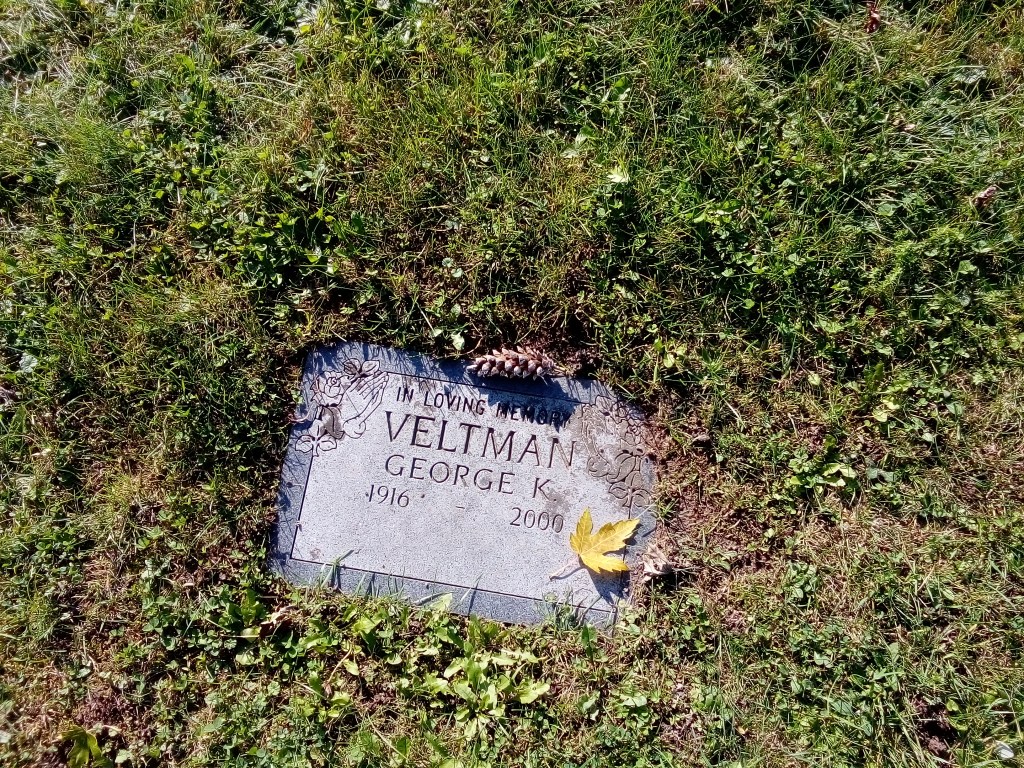
It is easy to build a family tree given all the resources available online.  It’s much harder to reconstruct a life.  I find photos, and newspaper clippings, but those do not add up to a life.  Gravestones tell me when a person was born, and when they died, but tell me nothing about the life they lived.

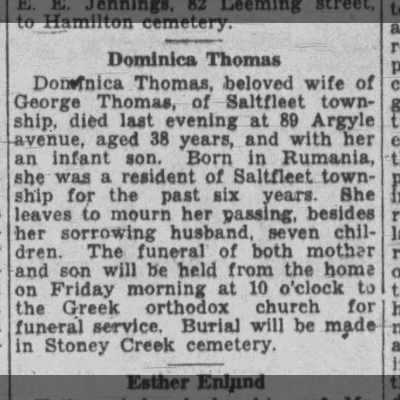
Every morning when I open my family tree, I am humbled by, and thankful for those who came before me. I am grateful to have been born in Canada, after the wars and in a time of prosperity where health care is widely available.  My tree, and likely yours too, is filled with children and adults who died young, very young, throughout the 19th and early 20th centuries.  My great-grandmother passed away giving birth in her home, in a working-class Ontario city, in 1929.  She was only 38-years old.  The son she bore died that night too.  I think of the legacy that those deaths must have had on that family. 

My foray into genealogy has reminded me that no person or group has a monopoly on suffering.  It is a part of the human condition. 

Above all, delving into the past, reminds me of the importance of the present moment, and reinforces for me that nothing matters more than the love and well-being of our families and those we love.

The People Around Me

Featured

Midway through the last long weekend of the summer, our neighbourhood was still and quiet.  People were camping and travelling – the last flurry of activity before school started.  I was also still and quiet which allowed me to hear sounds hidden in the background – birds, a neighbour tinkering, a dog barking.  Nothing moved except trees and bushes swaying in a gentle breeze.  The air was warm even though it was early evening.  I sat on our front porch, hidden from view behind lush leaves and pink flowers.  My wife sat beside me, a glass of wine in her hand.  

Our home is usually a cacophony of sound – often emanating from, and around, our daughter.  She is rarely still or silent and her presence envelops my wife and I in her world.  But that Saturday night she stayed with her grandparents and her aunt.  The timing was good.  I love her more than anything in the world.  Even so, she drained me that day – physically and mentally, and my dad battery ran low.

Two days have passed, and now it’s Labour Day.  The unofficial last day of summer feels like the unofficial first day of fall.  I’m back on the front porch.  There’s no warmth in the air.  Grey clouds hide blue sky.  It’s not quite as quiet.  Kids have returned to the park across the street.  Distant traffic is louder.  A pink pick-up truck I’ve never seen before just drove by our home.  There’s gloominess in the day, or in me, or in both. 

We all grow up returning to school in early September.  It’s familiar and comforting.  I live it now through my daughter’s eyes and her emotions – an amalgam of nervousness, fear and excitement.  My little girl, who once weighed less than four pounds and spent her first few weeks in an incubator in an intensive care unit is about to start Grade 2.  It’s a mix of emotions for me too.  Gratefulness for her sheer existence.  Wonder and awe as I watch this little person grow and develop and change every single day.  Thankfulness that she is still young and naïve and plays with dolls and loves mermaids.  Concern for her gentle soul as she grows up in a world where not everyone is fundamentally kind, or inherently decent.  I remind myself that most people are good most of the time.

Many of those good people live in our neighbourhood.  Kindness abounds and is often centered around our daughter.  We returned from a walk this morning to find a bag of cookies on our doorstep, made for her by a thoughtful woman who is a masterful baker and gracious person.  We were returning from that walk because we’d borrowed ‘Skye,’ a little terrier whose owners allow us to walk their dog, to help my daughter overcome a fear of dogs.  Our living room now has a miniature dollhouse thanks to another neighbour who needed to find a home for his 98-year-old mother’s family heirloom.  That this man thought of my daughter and reached out to us so she would have that dollhouse meant the world to me.  Several weeks ago, our family “camped,” when a good friend parked his 40-foot motorhome in our driveway for the weekend.  His generosity made for sheer joy for my girl who is desperate to camp, and saddled with parents who are not desperate to camp.  Roasting marshmallows in our driveway was as special to her as a trip to Disney. 

This morning I contemplated leaving our neighbourhood.   After we’d walked the dog and found the cookies, I hopped in my car to drive by a house for sale.  It’s not far away. Ten minutes maximum.  But the home is on a steep hill, in a subdivision built on a dramatic incline.  The subdivision has beautiful homes, many with ocean views.  The home I drove by is newer than ours.  It’s bigger.  It’s near a pathway that leads to the ocean.  I miss living a short walk from the ocean.  I tell myself that I should “want less” and I know there is much truth and wisdom to those two words.  Yet, I’d like to live in a home that’s a little bigger, with a yard that is a little smaller, and needs less care. 

I wrestle with what’s the right thing to do.  What’s the right thing to want – or not want.  When I drive in that area, when I walk in that area, it does not feel like a neighbourhood.  It feels like a collection of houses that happen to be in the same location.  The steepness of the streets make it so much less walkable than where we live now.  And walkability breeds contact and conversation – kindness and friendship.    

There is so much value in taming our desires and being grateful for those things we have.  I would miss this neighbourhood so much if we ever left it.  I do feel drawn to the ocean.  It has always had an almost mystical allure for me.  But if we moved to be closer to the Pacific, I would leave behind the trails, hills, and mountains which are so close to me now.  I can run from my home, and, in less than five minutes, be totally alone in nature.  That is another gift which our neighbourhood gives me, every single day. 

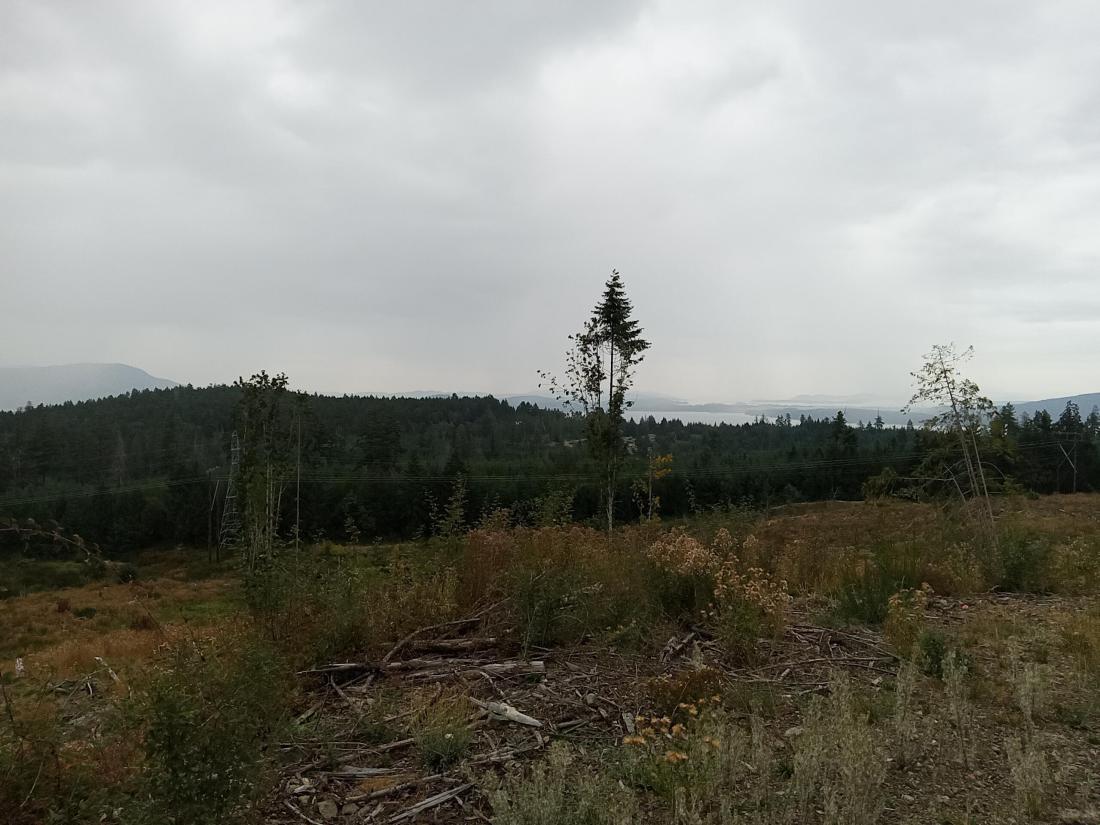
Yesterday, I hopped on my bike and escaped high up in the forest.  I rode, and hiked, and found myself alone, and elevated, surrounded by acres of trees, with a spectacular view of mountains and the ocean.  Maybe that’s all the ocean I need.

It’s still Labour Day.  It’s still gloomy. And I’m still on the front porch.  I hear a basketball bouncing.  I see children riding their bikes.  I know school lunches are being made, and backpacks being packed.  And I’m thankful for where I live and the people around me.

Impermanence

Featured

My fiftieth birthday recedes daily, but it’s never far from my mind.  If I live to be one hundred, then less than half my life remains. 

I am impermanent, and the recognition of this impermanence colours my life.

I’m declining.  Physically and mentally.  Science, physics, and Arthur Brooks say so.  In his book. From Strength to Strength, Brooks writes abut how our mental and physical capacities inevitably fade with time.  However, Brooks, describes how the back half of our lives – the older years, can be filled with happiness and deep purpose, because the older we get, the better poised we are to serve others by mentoring and teaching, and as he writes, “to face decline – and even death – with courage and confidence.”  [From Strength to Strength (arthurbrooks.com)]

Brooks writes about Buddha.  Over the last year, I have become increasingly drawn to Buddhism, not as a religion, but as a system of thinking and way of being.  Impermanence is at the heart of Buddhist philosophy.  Both Buddha and Brooks caution us to be wary of attachment to things, be they cars or careers, because all things are fleeting.

I’ve attached myself to reading, writing, and running.  I’ve defined myself in those terms, whether naming this website, or describing myself on the dating app in which I met my wife.

All three are at the core of my life, yet I could lose any one of them, at any time.  Accident or injury make all three tenuous.  One bad fall on a steep trail could crack my skull and rob me of reading, writing, and running.  I can’t imagine life without them.

Actually, I can.  We’ve been travelling this last week.  Eight nights in Ontario, visiting family and friends. 

Over the last week, I have not been a Reader, Writer, or Runner.  Instead, I have been an Eater, Drinker, and Driver.

I let go of my attachment to clean eating and gorged on fried food and ice cream.  I felt ill every time I did it.  And did it over and over again.

I drank more over two nights than I have in the last six months.  Gin and tonic, beer and wine, rye and coke.  I drank only in part because I enjoy those tastes and flavours.  I drank to let go. I drank to decompress.  I drank for the buzz.  I drank to enjoy a night with friends.  A night I didn’t want to end.  An evening later, and many miles away, I drank because my wife and I played ‘Name that Tune’ in a bar along a canal in the small town where I grew up.  I drank there because it was fun, and I drank there to release my inhibitions, so I would get up and dance to earn extra points for our team.  I drank because, a night of drinking the night before created momentum and it was easier to say yes to drinking because I’d said yes the night before.

I drove a lot in Ontario, mostly on the busy streets of Brampton, an endless processions of red lights, and constant gridlock.  Two days of driving in Brampton, contributed to more than two strong drinks in Guelph, a picturesque city just outside the orbit of Toronto area traffic.  I relished the drive to Guelph, through small towns and the countryside.  We stopped in Rockwood, at a gazebo beside a river.  We visit this park every year because it is lovely, and water flows alongside it. 

The following day, on our way to the Niagara Region, we sat in traffic for what felt like forever, when an unseen accident, or the sheer volume of cars, ground the Queen Elizabeth Way to a halt.  After more than five decades of life, most of them living in Ontario, and hundreds of trips on ‘the Q.E.W,’ it was my first trip on that highway since the Queen’s death.  We finally escaped bumper to bumper traffic when an exit ramp led to fried food and ice cream, and an extreme hit of salt and sugar.  Junk food momentum had attained peak velocity.  My stomach still hurts.

Impermanence comes in handy when it comes to eating, drinking, and driving.  I know that when we get back to Vancouver Island, my meals will be fresh, my drinks will be ice water, and it will take me a month of commuting to encounter as many red lights as I did during a week in Ontario.

Impermanence will remain on my mind.  One of the best sports writers in the world is Joe Posnanski.  A few days ago, he did not write about baseball or athletes, and instead about his now adult daughter, and how they went to a Taylor Swift concert together, and how Swift’s music had been the soundtrack of his daughter’s life, since she was a little girl.  And while he loves his adult daughter more than anything, he misses his little girl. [Taylor-Made – by Joe Posnanski – JoeBlogs (substack.com)]

Every second of this trip I was conscious of the preciousness of having a young daughter.  A special seven-year-old who crammed a year’s worth of fun, adventure, and tears into a single week.  She shopped at a thrift store with her grandma and bought a five-dollar porcelain doll which she immediately treasured.  Two days later that doll’s head was crushed by a reclining car seat.  I saw her face the moment it happened.  Pure distilled sadness.  An ocean of tears.  Tears that halted when our good friend, who also saw it happen, entered her home, and returned with another porcelain doll.  One that had belonged to her mother.  A doll that was decades old – a Barbara Ann Scott figure skating doll.  A family heirloom passed from our friend’s family to ours.  Barbara Ann is on the plane with us now.  Likely her first time flying, en route to her new home in British Columbia.

I saw a lot of tears this week.  My daughter was disconsolate when she had to say goodbye to her aunt.  An aunt with whom she’d camped overnight for the first time ever in a Port Colborne backyard with a campfire, marshmallows and no mom and dad. 

More tears flowed at The Mandarin restaurant when a straw and some Coca Cola dislodged a loose tooth.  Blood streamed from her mouth.  Not a lot, but enough to scare her.  Mom took care of that quickly.  Then I joked with her about how blood gushed from her mouth and people fled the restaurant in terror.

A few days later, in Niagara Falls, the Maze of Mirrors, induced real terror.  Mom and Dad missed the clue in the title – MAZE!  We thought we were entering a fun house where mirrors would shrink us, expand us, and make us laugh.  Instead, it was an almost impossible to escape building, where mirrors made it appear as if we were everywhere all at once.  My daughter shrieked and cried.  We latched onto another dad and his little boy who were maze veterans and we exited on their coattails. 

Laughter and fun overshadowed tears. My daughter went on the Ghoster Coaster at Canada’s Wonderland.  She was scared, and she did it twice.  It was her first roller coaster ride ever and I was proud.  She played Pac Man for the first time.  She swam in the hotel pool.  The three of us jumped together at a trampoline park – the closest thing I got to a workout all week long.  She hugged everyone over and over.  She ate almost as much ice cream as I did.  She said she wanted to move to Ontario.  She didn’t want to leave her family behind.

All impermanent.  She’s growing up, just like Joe Posnanski’s daughter.  And the laughter and tears of this past week are already in the past.

We will land in a few hours and life will return to normal. Our home, our meals, our routines.  I’ll be at work in a few days and my stress will return.  My wife will return to her own more than full time job – managing the operation of our home and family.  Her stress will return.  My daughter will resume summer vacation, which as an adult, in retrospective, seems idyllic to me, but as a dad, I know will mean more moments of stress and tears for my little girl.

Every moment with my family and friends in Ontario was special.  I miss my parents, and my brother and his wife and children.  I miss them desperately and I miss them year-round.  I entered this trip drained after a few months of nightshifts, and the stresses of a new job. 

I finish this trip with a healthier soul, infused by family and friendship. 

I finish this trip knowing I will return to reading, writing, and running.  Despite their impermanence.

For a Moment…

Featured

My daughter is seven. 

I turned seven in 1977. Toronto Blue Jays’ bleacher seats were two dollars.  Jimmy Carter was President.  A soldier who’d fought in World War I and World War II visited our home.

My dad turned 7 in 1950. Harry Truman was President.  The Korean War began weeks after my father’s birthday.

My Dutch grandfather turned 7 in the 1920s.  Born during the Great War, that 7-year-old boy did not know that he would live under Nazi occupation and that his daughter, my mom, would be born as fighting raged around them.

I have no idea when my great-grandparents turned seven.  It must have been in the late 1800s.  I know nothing about them.  They are as mysterious to me as medieval peasants.  Their lives mattered.  And they are invisible to history.

Last year, a friend at work gave me a copy of Marcus Aurelius’ Meditations.  A pillar of Stoicism, Aurelius and the Stoics encourage us to recognize and embrace our impermanence.

I think about impermanence daily. I always have.  But becoming a dad heightened that tendency.  Being a dad is like impermanence on steroids.  Every day my little girl grows up a little more and becomes less of a little girl.

She talks a lot.  Like when I’m sitting on the couch, trying to write this.  Part of me, inside, screams in frustration, yearning for silence so I can concentrate.  And yet, every word is precious.  Every silly, nonsensical thing she says, like, “what squishy butt isn’t marshy.”  (The answer is marshmallow). 

Impermanence is everywhere.  Yesterday I found a photo of myself from almost ten years ago.  I looked at it and thought, ‘I look pretty much the same’.  I showed it to my wife and she said, “You look so young!”

A few months ago one of my favourite trails was closed when an old-growth fir tree toppled in a windstorm.  For years, that tree had clung to the side of a hill.  It was massive and precarious, leaning at an angle that suggested it would fall any moment.  It did not surprise me that heavy rain and high winds sent it crashing to the ground.  It may have been hundreds of years old. 

Last fall I planted a sapling in our backyard.  It didn’t survive the winter.

 Marcus Aurelius  wrote, “Our lifetime is so brief … Consider the abyss of time past, the infinite future.  Three days of life or three generations; what’s the difference.”

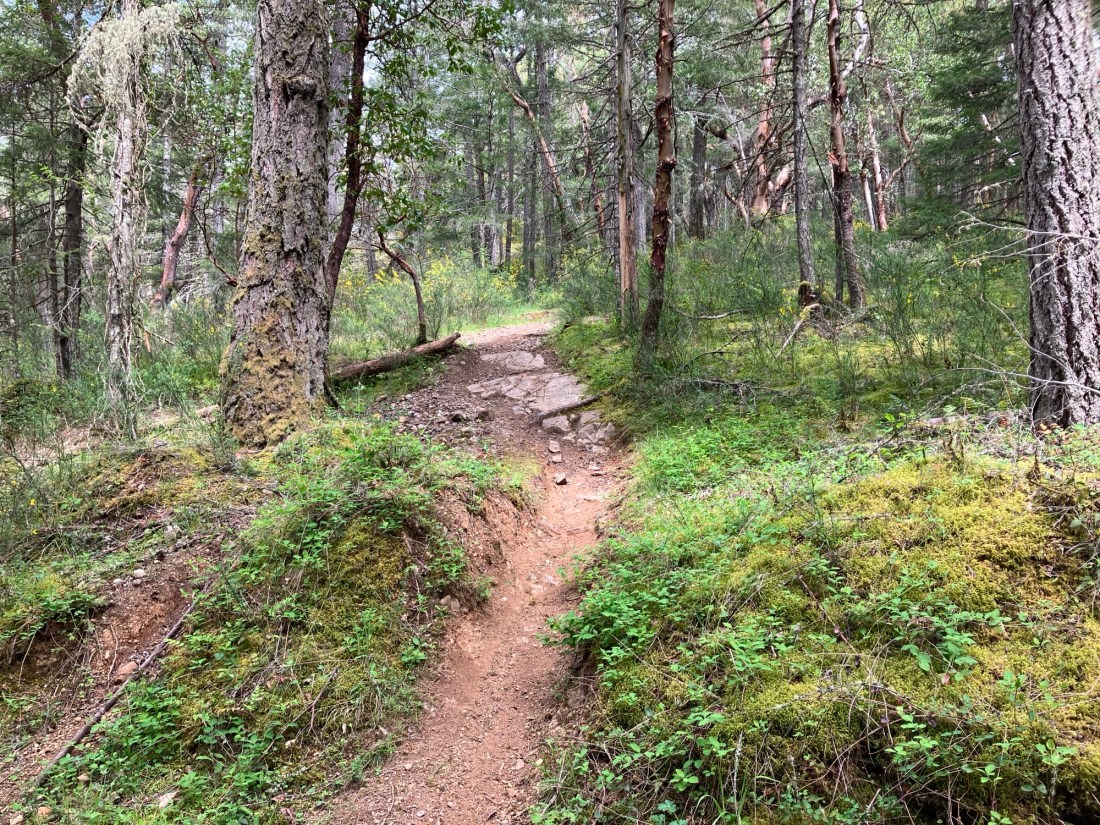
I’ve gravitated to the trails over the last few years.  In part, it’s because the dirt paths are much gentler on my aging joints than unforgiving pavement.  But there is more to it.  Our forests are a never-ending reminder of impermanence. 

Stoicism invites us to put impermanence front and center in our lives.  To live neither in the past, nor in the future, but in the moment.  It is not a cliché to say that this moment, is all we truly have. 

And yet these moments span generations.  I look at a picture of myself beside the fallen tree and I see an expression I recognize as my father’s in my own face. 

This morning my daughter commandeered a bathroom.  She put a “Keep Out” sign on the door and told us she was turning felt into silk.  She called out for purple and yellow markers, scissors, and tape.  After thirty minutes she emerged and handed me a paper tie to wear when I dress up to go out for dinner tonight.  On the tie she’d written “you are the best dad ever.”

My daughter is seven.  This morning, for a moment at least, I was the best dad ever.  I know that too is impermanent.  A few years from now, a teenage girl may feel dramatically different about her father.

Stoic philosophy reminds me to accept and embrace the reality that trees grow and trees fall.  Daughters are young and silly and daughters grow up.  Dads age, and dads hobble and dads look more like their own fathers.  Each of those moments is all that we have.  And yet, those moments bind us to the past and anticipate our impermanent futures. 

At Home

Featured

A lot can happen in a short time.

I spent much of the last month away from home – almost two weeks in the Fraser Valley taking a course, and then a short stint on the west coast of Vancouver Island, as part of a team assigned to an investigation.

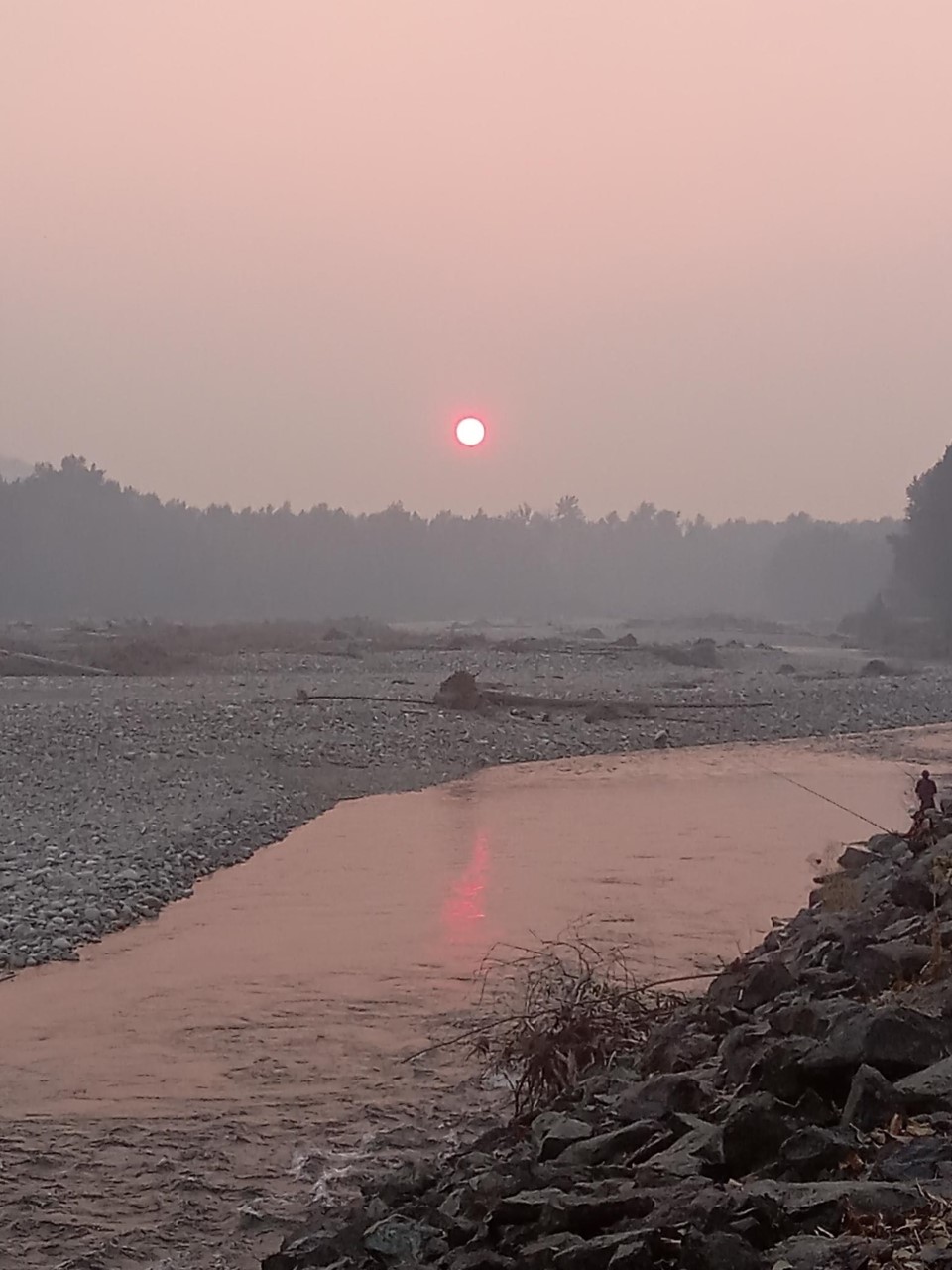
Wildfire smoke clogged the valley, the debris of millions of incinerated trees hung in the air for days on end.  The floating particles found their way into my lungs and permeated my clothes.  Every piece of clothing I wore outside reeked.

While I was in the valley, a police officer was murdered not that far away.  I was in a room full of cops when the news broke.  Grief hung in the air, as real, and more hurtful than the ash from the fires. 

Everyone on the course had many years, even decades, on the job.  The officer who was killed, had barely three – her career was in it’s infancy, her life, in many ways, just beginning.

When the course ended, I drove home.  The wildfire smoke did not dissipate until I reached the ocean, more than 100 kilometers away.  I took a ferry home.  I was so glad to see my family.

I took the same ferry again last week.  One of thousands who gathered for the slain officer’s funeral.  Her family, friends and colleagues spoke so well.  It was clear that she was a special and remarkable person. 

It was in the days between ferry rides that I was on the west coast of the island.  My unit investigates death.  The small town where this occurred is a tourist mecca.  However, we were not there as tourists.  We stood out everywhere we went in our pressed pants and dress shirts.  A few days in this town reinforced a truism of our work – that when someone dies suddenly and unexpectedly, the effects are wide, profound and long lasting.

Despite my observations, and my job, none of the things I write about above were about me.  My career, and my current job, put me in a position where I have the privilege of trying to play a part, however small, in trying to help people through dark times.

However, the things I write about above do affect me.  They continue to mold and shape me even though I’m over fifty years old, with more than two decades on the job. 

This morning I’m at home with my wife and daughter.  There’s coffee and juice, waffles, dolls and a Barbie movie.  A perfect Sunday morning.  Outside it’s grey, the fog hanging over the trees reminiscent of the wildflower smoke which hung over the valley.

Today I will run on trails, read whenever I have a spare moment, call my parents and hug my girls.  I’m thankful to be at home.

Scattered Thoughts

Featured

I’d like to write more, but often I’m pressed for either time or ideas.  Sometimes a photo prompts my next piece. Usually something happens that I feel compelled to share.  When the ideas strike, the pieces often write themselves.  I’m just the conduit.  At least that’s how it feels. 

Today I have time but no ideas.  Photos but no stories behind them.  Many things on my mind, and none of them flowing through my fingers.  More like scattered thoughts colliding.

I’m fifty-one.  Maybe closer to death than high school.  I was thirty when I became a cop.  I remember driving home at the end of a nightshift, pulling into the driveway, and wondering: wondering when I’d feel like a grown-up, wondering when I’d feel comfortable in my own skin, wondering when the world would make sense.

The world still doesn’t make sense.  Yesterday in Buffalo, New York innocent people were slaughtered in a grocery store.  I grew up near the U.S. border.  My parents shopped at that grocery chain regularly.  The grocery store is called “Tops.”  I can still hear their jingle in my head “Tops Never Stops Saving You More.”

I’ve given up trying to make sense of the world. That’s not going to happen.  Which ironically, may be an important step in having a better understanding of myself.

I may not be there yet – understanding myself that is – but I feel like I’m on the right path. It’s only taken half a century.

Fatherhood has helped.  Not that it’s easy.  Every day I grapple with being a dad.  When to discipline?  How to teach life lessons?  What’s the best way to help an innocent child become a strong and confident girl?

Until very recently I listened to the Marathon Talk podcast.  The hosts embraced the notion of trusting the process.  It’s fine to have a goal, but the goal is secondary to the work you do along the way.  It’s the steps that matter, whether in marathon training, or raising a daughter.  Any goal is the product of the steps and moments that came before it.  Take your steps.  Live in the moment.  Keep your eyes on the horizon.  Never stop moving.

I became truer to myself when I stopped eating meat.  I eat a whole food plant-based diet because I believe it’s my best chance to live a long and healthy life.  There’s more to it than that – changing the way I ate showed me that, daily, my ideals and values could be in alignment with my actions.  That was a powerful lesson. 

Veganism led me to Rich Roll.   Rich chronicled his journey from addict to endurance athlete in his book ‘Finding Ultra.’  His podcast guests are leaders in their fields; health, neuroscience, athletics, and the arts.  Podcasts have reshaped the path I’ve taken in my life. They’ve changed the way I breathe, encouraged me to write, inspired me to wake up at 3:00 a.m. to run miles in the dark, and, conversely, prompted me turn my alarm clock off because sleeping may be the best thing any of us can do to promote physical and mental health. 

I used to have one or two books on the go at any one time.  Recently it’s been five or six.  Although the world doesn’t make sense, books help me navigate my way through it.  I’ve been reading about survival, hostages in Iran, a German general kidnapped in wartime Crete, the latest Reacher novel, a collection of essays from Jedidiah Jenkins, and Marcus Aurelius’ Meditations.  I read with a pen in hand, underlying meaningful passages.  I read with my journal by my side, and I copy especially meaningful passages into it.  Great writing moves me.  Incredible stories inspire me.  They all help me focus on my process and my path ahead.

My wife and I have a close friend whose mother is terminally ill.  Words so often fail in those situations.  So we sought the answer in words more eloquent than any we could ever express.  We sent a copy of Susan Cain’s latest book, ‘Bittersweet’ which is about grief.  Cain wrote ‘Quiet,’ a book about introverts.  It helped me better understand myself.  Without having read it, I know ‘Bittersweet’ will be an eloquent, thoughtful work which will help people all over the world.

I have a friend who did something special yesterday.  He ran one hundred kilometers in fourteen hours.  That’s more than two marathons.  He suffered.  He endured.  He finished.  His achievement was even more remarkable because of his training.  His longest training run was 10 kilometers.  He’s in excellent shape.  Obviously that helped.  But, on paper, no coach would draw up a training program without incorporating much longer runs.  On paper he should have done 20-, 30- and 40-kilometer runs.  He didn’t.  He didn’t need to. His mental toughness is off the charts.  He ran sixty-two miles yesterday with his mind. 

The mind.  That’s another thing podcasts have helped me appreciate.  The power of the mind.  To heal.  To create.  To help us reshape ourselves through meditation, and by visualizing the lives we want to lead.

Two more scattered thoughts.

Yesterday we adopted a kitten.  Her name is Molly.  Our daughter’s name is Molly.  We’re going to have to rename our daughter.

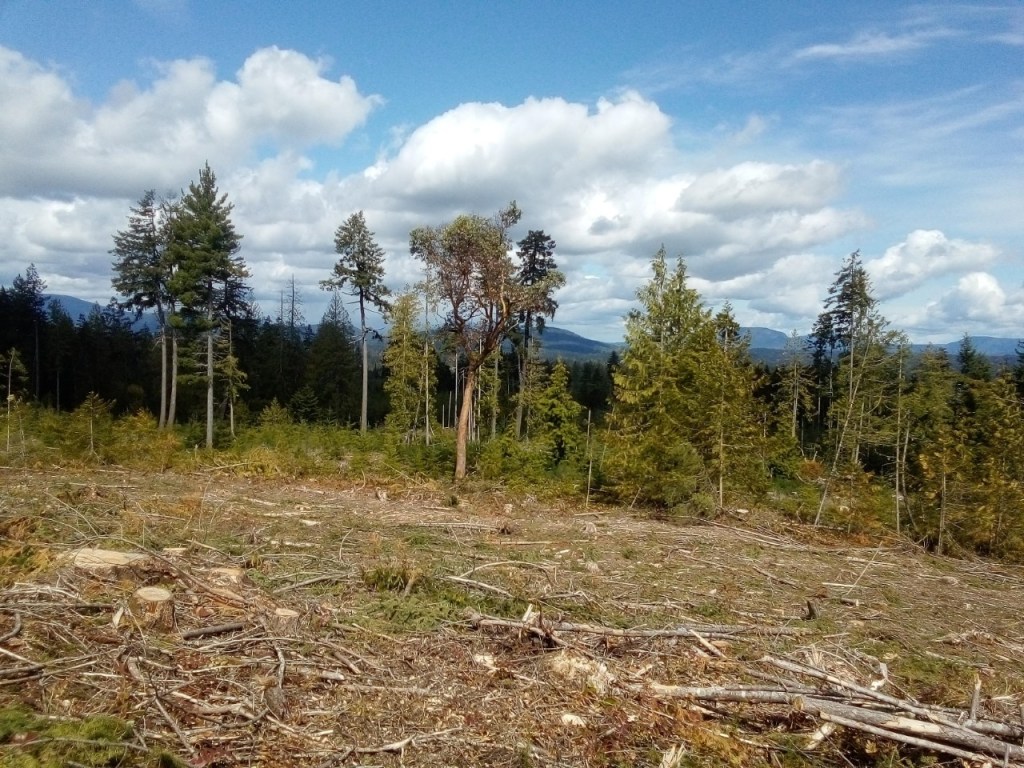
The pictures of the fallen trees are from a cutblock not far from our home.  I walked through it, and although it was undeniably apocalyptic, it wasn’t awful.  There was beauty in the desolation, and in the rich green forest behind it. 

Nails on the Trail

Featured

The trails near our home are open to everyone.  The backcountry beckons.  I run while others mountain bike, hike or walk their dogs.  Some ride their dirt bikes or quads.  Sometimes when I run, I hear their engines roaring in the distance.  When we cross paths, I breathe exhaust fumes instead of fresh air. 

But the forest and trails are vast and my encounters with motorized vehicles are always fleeting.  I wave or nod to the riders as we pass one another.  We have different interests but a shared love of the outdoors. We mean one another no harm.

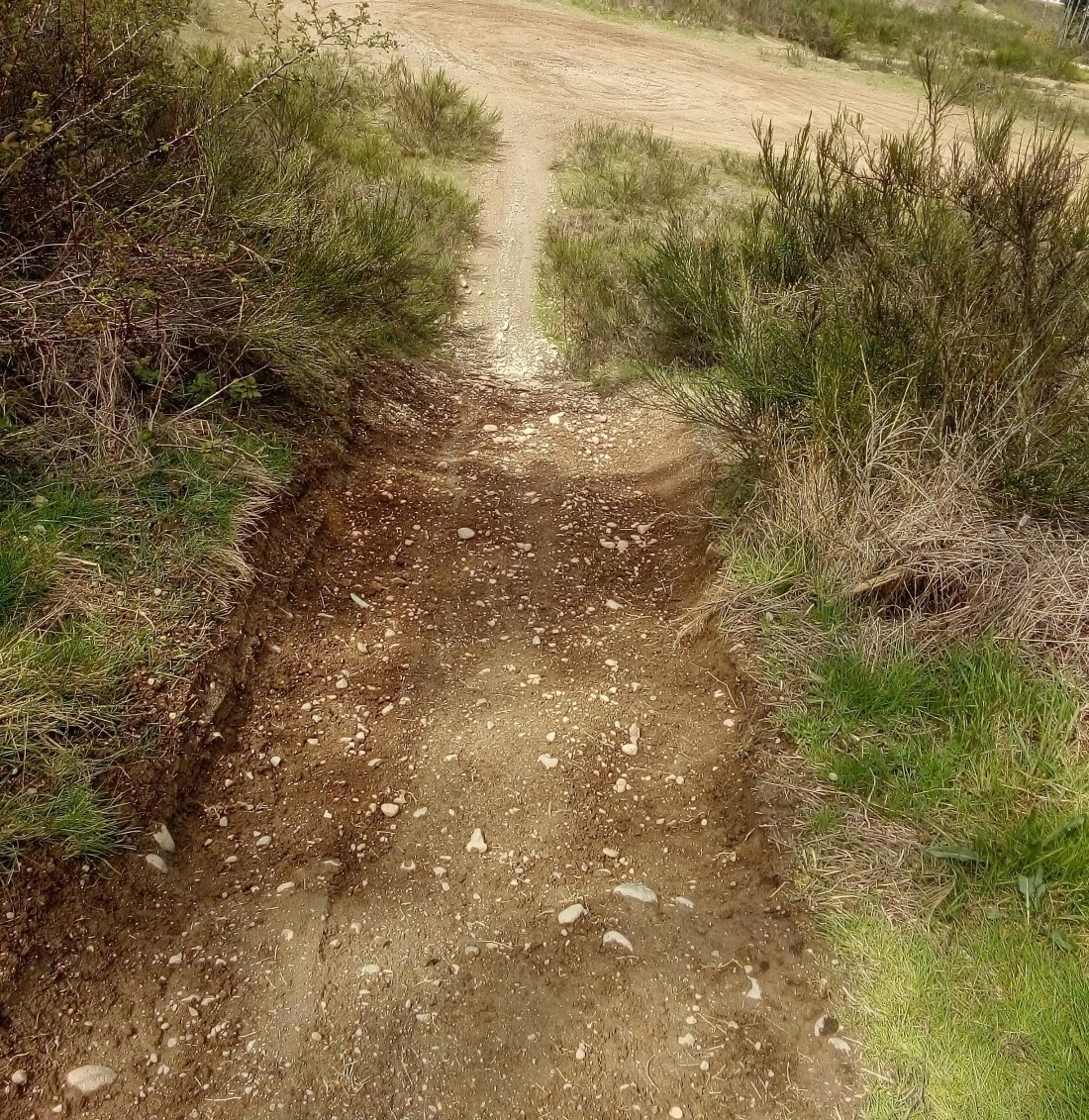
I love to run hills.  There is nothing better for the legs and lungs.  And I’m lucky.  I can walk out the front door, and minutes later be doing a grueling uphill workout.  Long and steep it holds the false promise of reaching a peak.  But there’s no summit for a long time, just short breaks, and then more inclines – steep dirt tracks with scattered rocks and boulders.  They’re ideal for trail running.  And motorbikes.  Sometimes I see the bikes themselves.  Usually tire tracks are the only evidence of their presence.  They are loud but my encounters with them while running are rare.  And we can not hear them from our home.  But others must, because this isn’t the backwoods yet.  More like the shared backyard of a subdivision where hundreds of people live.

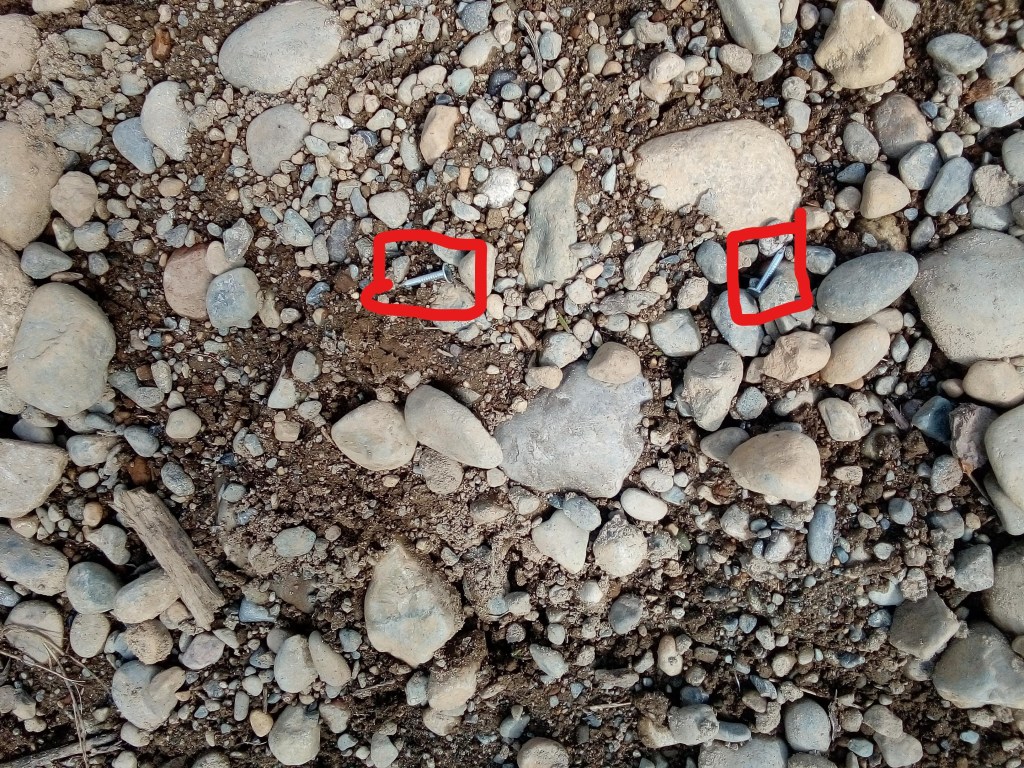
A few weeks back I was running up one of these short, steep trails when I saw a nail laying on the ground.  And then two nails, and a third and a fourth, seemingly buried in the dirt intentionally, all over the trail.  Each one placed carefully and with malice, guaranteed to puncture the tires of a dirt bike, or a quad.  Equally guaranteed to pierce a dog’s paws or a child’s flesh.

I picked up eleven nails and filed a police report.  I returned a few days later and found at least ten more.  Maybe I’d missed them the first time, buried underneath the dirt and rocks.  Maybe whoever put them there had returned. 

It is in our nature as human beings to hurt one another.  We hurt those we love.  We hurt people we hate.  We hurt people we don’t know.  So, I was not surprised to find those nails on the trail.  Not surprised.  But saddened and angered.  Thankfully, no one was hurt. 

I still run that trail.  I was there yesterday.  I found six more nails.  One was visible, churned up after I ascended, I spotted it on the descent.  I excavated the area and found five more.  I picked them up and added them to the now harmless pile of nails I’ve created inside a nearby concrete barrier. There are thirty nails in that pile now.

Thirty.  Someone carried thirty nails to that trail, got down on their hands and knees, placed them individually along both sides of the trail and right down the middle, and then covered them with dirt and rocks.  That’s cold. That’s premeditated.  That’s malicious.  That’s humanity.

The dark side of humanity. 

We’ve had illness in our family recently.  Metaphorically one of us stepped on a nail on the trail.  That nail was Covid.  It hit hard.  Its effects are still being felt.  Things are improving but not back to normal.  In the toughest days we saw the best of humanity.  A sibling and parents who dropped everything to care for the one they love.  Friends and neighbours coming to the house and offering their medical expertise, bringing soup, dropping off cookies.  Flowers and well wishes arrived from across the country.  We saw the best side of humanity.

The absolute opposite of nails on the trail.

Flat Miles

Featured

Flat miles.

There’s no such thing on Vancouver Island.  Up and down, up and down.  Every run is a series of ascents and descents. 

Southern Ontario is gloriously flat.  I took advantage of that a couple weeks back, when I was home, alone, visiting my family.  I logged a lot of miles.  It was easy to do.  I had lots of time, and few responsibilities. 

I ran every day, except one.

Things happened in Ontario.  And I ran.

That’s the thing about running.  It’s with you always.  Wherever you are.  A runner can always run.  A runner can structure his day around a run.  Or a runner can squeeze in a run even when the day is busy and unyielding.  A runner finds time to run.

And think.

I had lots to think about when I ran in Ontario.

My mom.  Recovering from a stroke.  Working so hard on her rehab. Moving so well.  Speaking so well. I was very proud of her.

My dad. We ran together.  That was special.  He’s been doing it for five decades.  Part of the first great running boom of the 1970s.  He’s nearing eighty and still running.  Runners run.

My grandparents. I visited my grandfather’s grave. Born during the Great War, he and my grandmother started their family during World War II, in occupied Holland. My mother and her twin sister were born as the Battle of Arnhem was fought nearby. A famous battle – The Bridge Too Far battle. My mother’s twin died shortly after she was born, in a starving nation, torn by war. My grandmother’s name is not on the gravestone. Her ashes were scattered elsewhere. In my memory, they are always together.

My wife and daughter.  They did not make the trip.  My daughter is too young to be vaccinated.  There was an emptiness to this trip home, because my entire family was not together.

Guelph.  A small-town in Ontario.  I miss small-town Ontario.  I miss the brick buildings, Main Streets, and cenotaphs in town squares.  I miss walking in a small-town.  I miss feeling I’m part of a small-town.  I didn’t realize how important it was to me until I left it behind.

ACAB. An Acronym for ‘All Cops Are Bastards.’  Spray-painted on the wall of a cake  shop in Guelph.  I know a lot of cops.  All cops are not bastards.  I thought about how widespread anti-police sentiment has become.  I thought about the assaults my colleagues in Victoria have been subjected to recently.  Serious assaults.  I thought, if the ‘C’ in the acronym was replaced with a letter that stood for a different group, it would be a hate crime.

People.  I didn’t fly home to wander through small-towns.  I went for people.  Like my wife’s best friend and her husband.  They have become my friends.  A trip back home without seeing them is unimaginable.  People I only met a few years ago, are now important parts of my life. 

Life takes twists and turns.  I had dinner with my ex-wife. For the last 18  months, she has been on the frontlines of the battle against Covid.  Her efforts have kept vulnerable seniors alive. She has endured immeasurable stress.  She’s led her staff through difficult times.  I am proud of her.

In life’s twists and turns, there are constants.  Like my brother, and his wife and their children.  They are proverbial rocks in my life.  We don’t talk often and see each other rarely.  And yet we are there for one another, with a closeness and comfort level that transcends distance and time. 

I thought about the people I did not see.  My friend Stitch.  A man who has suffered, and endured, and come out the other side.  Strong and resilient.  If I called him and said I needed him, he’d drop everything and fly across the country in a heartbeat. No questions asked.

I thought about some people I have not seen in many years.  Once good friends who I let slip away. 

These are some of the things I thought about when I ran flat miles in Ontario.  It was hotter than I would have liked.  No crisp cool autumn days. And the colours of the leaves were muted, not vibrant.

Runners run.

And runners think.

And when this runner arrived home, in rainy, hilly, British Columbia, he was greeted by a daughter who shrieked, “daddy,” and he was a hugged by a wife he loves and missed, and he was thankful for everything he has, and everything that was.

Silence

Featured

Silence is rare in our home.

My wife is exuberant.

Our daughter is not a dud.  She rarely stops moving.  Or speaking. 

I’m quieter.  Not talking is my default. 

When I fly across the country to visit my parents after not seeing them for months, I often sit in the living room and read.  It must frustrate my poor mom as she regales me with stories, and I do not respond.  Instead, I’m mute, poring over the local newspaper.

Last week, after Covid restrictions loosened, we visited with my wife’s parents and sister for the first time in forever.  They are a passionate family – interested in everything – lulls in the conversation are rare.  We sat outside on their patio, which offers a spectacular view of the ocean. 

True to form, I said almost nothing.  I sat.  I gazed at the water and Mount Baker in the distance. 

I must appear disengaged.  Lost in my own world.

Yet that’s not the case.  In those situations, nothing is more precious to me than my family.  Being surrounded by those I love means more to me than anything. It is where I want to be.  It is my comfort zone. 

Talking isn’t. 

My wife and I joke that I “bury it deep.”  Why speak aloud what can safely be tucked away inside? 

I could do better.  I could talk more.  I do believe we should all push beyond our comfort zones.

Yet, we have comfort zones for a reason.  Water finds it level.  We do too.  Learning to accept who and what we are – those things that are intrinsic to our personalities, and fundamental to our beings, is essential. 

I don’t actually bury it deep.  If I did, this blog wouldn’t exist.  On it, I share some of my innermost thoughts.  Things I wouldn’t say over coffee with my family, friends, or co-workers, I write down for the world to see.  I can’t explain it. It just feels right. 

Like silence.

As we sat on my in-law’s patio, and they talked, I spotted two Orcas, no more than a hundred meters offshore.  The fins of these killer whales cut through the water with grace and precision.  It was a spectacular sight.

Silence has its rewards.