Always Feels Right

Featured

I read with a pen. I don’t remember when it started, but I’ve been doing it for years. I circle names, underline important or well written passages, and fill the margins with hyphens and asterisks to mark crucial information. I can’t see the words without my glasses. I can’t appreciate them without my pen.


It’s made reading much more expensive. No library books for me. I can’t mark up public property. Our shelves are overflowing with my books, even though dozens, if not hundreds more, have been banished to cardboard boxes in our crawl space. I almost never reread these books, and when a book is in progress, rarely do I look back at my hieroglyphics. But marking up a book, as I read it, is completely and totally necessary. It just feels right.


The feeling of something just feeling right is a precious gift.


Writing just feels right, although I’ve been doing precious little of it lately. But when I do, when I immerse myself in words, and when those words flow, there’s an unconscious beauty to it. Not that my words are beautiful, but the act itself transcends the mundane. Instead, it’s magical and the magic bends the arc of time, and an hour at the keyboard feels like only five minutes has passed.


That must be what it’s like to ride a motorcycle and feel united with the bike – man and machine, a single entity flying together down the highway. Or to play the piano brilliantly – without hesitation or thought – gentle fingertips with an intimate touch, strong hands pounding the keys – and the air around the piano vibrates with the same sounds that once filled the minds of Beethoven, Bach and Mozart.


Running never feels just right. Something always hurts. My right heel is a source of constant pain. My left heel, whether from sympathy or neglect has now joined in to make pain free walking, much less running, a distant memory. Sometimes my legs epitomize sluggishness, and I plod along feeling like I’m encased in concrete. And when my legs do feel loose and limber and I run hard, and fast and free, I can feel the lactic acid settling into my muscles, ensuring that the following morning, when I will wake up, I will limp and stumble from the bed to the couch. And yet, despite the pain, running is as meaningful and vital to me as reading and writing.


Being a dad – being a parent – is more like running than reading or writing. It’s not a smooth ride down the highway or a baroque masterpiece. Like running, parenting is hard, and sometimes painful. Like running, parenting is also precious and infinitely rewarding. Words may flow magically but parenting decisions do not.

I have come to believe, that like many things in life, there are rarely clearly ‘right’ and clearly ‘wrong’ decisions. Most of us, on most days, make thousands of decisions, small and large. We do the best we have with the information we have on hand, often weighing the possible consequences of choosing one reasonable course of action over another seemingly equally reasonable decision. As a parent those decisions are never-ending: Where should my child go to school? How much YouTube is too much for a growing brain? [Arguably, any YouTube is too much for any brain]. When do I intervene, and when do I just stand back and let things happen? Does the behaviour require discipline? Or a hug? Or both? Am I making a good decision or just an easy decision?


I’m a lucky dad with a beautiful daughter. Kind and gentle, spirited and sassy, funny and fun. Being a dad, being a parent, shouldn’t be easy. Running hurts but the hurting helps. It teaches me to listen to my body. To take a rest day because my heel needs a day off more than my spirit needs to run. That’s a reasonable decision – maybe not the right one, but maybe not the wrong one either.


So goes parenting. Maybe not the right decision, but maybe not the wrong one either. And when all is said and done, choose the hug. That always feels right.

The People Around Me

Featured

Midway through the last long weekend of the summer, our neighbourhood was still and quiet.  People were camping and travelling – the last flurry of activity before school started.  I was also still and quiet which allowed me to hear sounds hidden in the background – birds, a neighbour tinkering, a dog barking.  Nothing moved except trees and bushes swaying in a gentle breeze.  The air was warm even though it was early evening.  I sat on our front porch, hidden from view behind lush leaves and pink flowers.  My wife sat beside me, a glass of wine in her hand.  

Our home is usually a cacophony of sound – often emanating from, and around, our daughter.  She is rarely still or silent and her presence envelops my wife and I in her world.  But that Saturday night she stayed with her grandparents and her aunt.  The timing was good.  I love her more than anything in the world.  Even so, she drained me that day – physically and mentally, and my dad battery ran low.

Two days have passed, and now it’s Labour Day.  The unofficial last day of summer feels like the unofficial first day of fall.  I’m back on the front porch.  There’s no warmth in the air.  Grey clouds hide blue sky.  It’s not quite as quiet.  Kids have returned to the park across the street.  Distant traffic is louder.  A pink pick-up truck I’ve never seen before just drove by our home.  There’s gloominess in the day, or in me, or in both. 

We all grow up returning to school in early September.  It’s familiar and comforting.  I live it now through my daughter’s eyes and her emotions – an amalgam of nervousness, fear and excitement.  My little girl, who once weighed less than four pounds and spent her first few weeks in an incubator in an intensive care unit is about to start Grade 2.  It’s a mix of emotions for me too.  Gratefulness for her sheer existence.  Wonder and awe as I watch this little person grow and develop and change every single day.  Thankfulness that she is still young and naïve and plays with dolls and loves mermaids.  Concern for her gentle soul as she grows up in a world where not everyone is fundamentally kind, or inherently decent.  I remind myself that most people are good most of the time.

Many of those good people live in our neighbourhood.  Kindness abounds and is often centered around our daughter.  We returned from a walk this morning to find a bag of cookies on our doorstep, made for her by a thoughtful woman who is a masterful baker and gracious person.  We were returning from that walk because we’d borrowed ‘Skye,’ a little terrier whose owners allow us to walk their dog, to help my daughter overcome a fear of dogs.  Our living room now has a miniature dollhouse thanks to another neighbour who needed to find a home for his 98-year-old mother’s family heirloom.  That this man thought of my daughter and reached out to us so she would have that dollhouse meant the world to me.  Several weeks ago, our family “camped,” when a good friend parked his 40-foot motorhome in our driveway for the weekend.  His generosity made for sheer joy for my girl who is desperate to camp, and saddled with parents who are not desperate to camp.  Roasting marshmallows in our driveway was as special to her as a trip to Disney. 

This morning I contemplated leaving our neighbourhood.   After we’d walked the dog and found the cookies, I hopped in my car to drive by a house for sale.  It’s not far away. Ten minutes maximum.  But the home is on a steep hill, in a subdivision built on a dramatic incline.  The subdivision has beautiful homes, many with ocean views.  The home I drove by is newer than ours.  It’s bigger.  It’s near a pathway that leads to the ocean.  I miss living a short walk from the ocean.  I tell myself that I should “want less” and I know there is much truth and wisdom to those two words.  Yet, I’d like to live in a home that’s a little bigger, with a yard that is a little smaller, and needs less care. 

I wrestle with what’s the right thing to do.  What’s the right thing to want – or not want.  When I drive in that area, when I walk in that area, it does not feel like a neighbourhood.  It feels like a collection of houses that happen to be in the same location.  The steepness of the streets make it so much less walkable than where we live now.  And walkability breeds contact and conversation – kindness and friendship.    

There is so much value in taming our desires and being grateful for those things we have.  I would miss this neighbourhood so much if we ever left it.  I do feel drawn to the ocean.  It has always had an almost mystical allure for me.  But if we moved to be closer to the Pacific, I would leave behind the trails, hills, and mountains which are so close to me now.  I can run from my home, and, in less than five minutes, be totally alone in nature.  That is another gift which our neighbourhood gives me, every single day. 

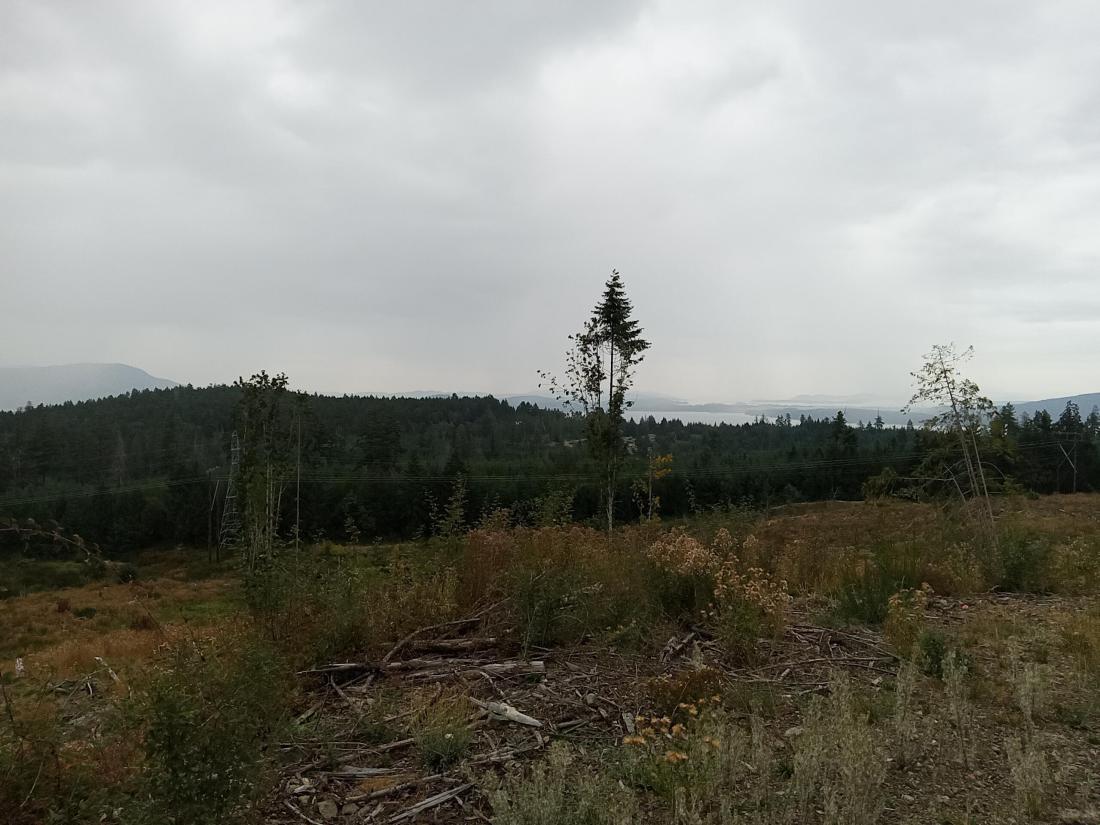
Yesterday, I hopped on my bike and escaped high up in the forest.  I rode, and hiked, and found myself alone, and elevated, surrounded by acres of trees, with a spectacular view of mountains and the ocean.  Maybe that’s all the ocean I need.

It’s still Labour Day.  It’s still gloomy. And I’m still on the front porch.  I hear a basketball bouncing.  I see children riding their bikes.  I know school lunches are being made, and backpacks being packed.  And I’m thankful for where I live and the people around me.

Impermanence

Featured

My fiftieth birthday recedes daily, but it’s never far from my mind.  If I live to be one hundred, then less than half my life remains. 

I am impermanent, and the recognition of this impermanence colours my life.

I’m declining.  Physically and mentally.  Science, physics, and Arthur Brooks say so.  In his book. From Strength to Strength, Brooks writes abut how our mental and physical capacities inevitably fade with time.  However, Brooks, describes how the back half of our lives – the older years, can be filled with happiness and deep purpose, because the older we get, the better poised we are to serve others by mentoring and teaching, and as he writes, “to face decline – and even death – with courage and confidence.”  [From Strength to Strength (arthurbrooks.com)]

Brooks writes about Buddha.  Over the last year, I have become increasingly drawn to Buddhism, not as a religion, but as a system of thinking and way of being.  Impermanence is at the heart of Buddhist philosophy.  Both Buddha and Brooks caution us to be wary of attachment to things, be they cars or careers, because all things are fleeting.

I’ve attached myself to reading, writing, and running.  I’ve defined myself in those terms, whether naming this website, or describing myself on the dating app in which I met my wife.

All three are at the core of my life, yet I could lose any one of them, at any time.  Accident or injury make all three tenuous.  One bad fall on a steep trail could crack my skull and rob me of reading, writing, and running.  I can’t imagine life without them.

Actually, I can.  We’ve been travelling this last week.  Eight nights in Ontario, visiting family and friends. 

Over the last week, I have not been a Reader, Writer, or Runner.  Instead, I have been an Eater, Drinker, and Driver.

I let go of my attachment to clean eating and gorged on fried food and ice cream.  I felt ill every time I did it.  And did it over and over again.

I drank more over two nights than I have in the last six months.  Gin and tonic, beer and wine, rye and coke.  I drank only in part because I enjoy those tastes and flavours.  I drank to let go. I drank to decompress.  I drank for the buzz.  I drank to enjoy a night with friends.  A night I didn’t want to end.  An evening later, and many miles away, I drank because my wife and I played ‘Name that Tune’ in a bar along a canal in the small town where I grew up.  I drank there because it was fun, and I drank there to release my inhibitions, so I would get up and dance to earn extra points for our team.  I drank because, a night of drinking the night before created momentum and it was easier to say yes to drinking because I’d said yes the night before.

I drove a lot in Ontario, mostly on the busy streets of Brampton, an endless processions of red lights, and constant gridlock.  Two days of driving in Brampton, contributed to more than two strong drinks in Guelph, a picturesque city just outside the orbit of Toronto area traffic.  I relished the drive to Guelph, through small towns and the countryside.  We stopped in Rockwood, at a gazebo beside a river.  We visit this park every year because it is lovely, and water flows alongside it. 

The following day, on our way to the Niagara Region, we sat in traffic for what felt like forever, when an unseen accident, or the sheer volume of cars, ground the Queen Elizabeth Way to a halt.  After more than five decades of life, most of them living in Ontario, and hundreds of trips on ‘the Q.E.W,’ it was my first trip on that highway since the Queen’s death.  We finally escaped bumper to bumper traffic when an exit ramp led to fried food and ice cream, and an extreme hit of salt and sugar.  Junk food momentum had attained peak velocity.  My stomach still hurts.

Impermanence comes in handy when it comes to eating, drinking, and driving.  I know that when we get back to Vancouver Island, my meals will be fresh, my drinks will be ice water, and it will take me a month of commuting to encounter as many red lights as I did during a week in Ontario.

Impermanence will remain on my mind.  One of the best sports writers in the world is Joe Posnanski.  A few days ago, he did not write about baseball or athletes, and instead about his now adult daughter, and how they went to a Taylor Swift concert together, and how Swift’s music had been the soundtrack of his daughter’s life, since she was a little girl.  And while he loves his adult daughter more than anything, he misses his little girl. [Taylor-Made – by Joe Posnanski – JoeBlogs (substack.com)]

Every second of this trip I was conscious of the preciousness of having a young daughter.  A special seven-year-old who crammed a year’s worth of fun, adventure, and tears into a single week.  She shopped at a thrift store with her grandma and bought a five-dollar porcelain doll which she immediately treasured.  Two days later that doll’s head was crushed by a reclining car seat.  I saw her face the moment it happened.  Pure distilled sadness.  An ocean of tears.  Tears that halted when our good friend, who also saw it happen, entered her home, and returned with another porcelain doll.  One that had belonged to her mother.  A doll that was decades old – a Barbara Ann Scott figure skating doll.  A family heirloom passed from our friend’s family to ours.  Barbara Ann is on the plane with us now.  Likely her first time flying, en route to her new home in British Columbia.

I saw a lot of tears this week.  My daughter was disconsolate when she had to say goodbye to her aunt.  An aunt with whom she’d camped overnight for the first time ever in a Port Colborne backyard with a campfire, marshmallows and no mom and dad. 

More tears flowed at The Mandarin restaurant when a straw and some Coca Cola dislodged a loose tooth.  Blood streamed from her mouth.  Not a lot, but enough to scare her.  Mom took care of that quickly.  Then I joked with her about how blood gushed from her mouth and people fled the restaurant in terror.

A few days later, in Niagara Falls, the Maze of Mirrors, induced real terror.  Mom and Dad missed the clue in the title – MAZE!  We thought we were entering a fun house where mirrors would shrink us, expand us, and make us laugh.  Instead, it was an almost impossible to escape building, where mirrors made it appear as if we were everywhere all at once.  My daughter shrieked and cried.  We latched onto another dad and his little boy who were maze veterans and we exited on their coattails. 

Laughter and fun overshadowed tears. My daughter went on the Ghoster Coaster at Canada’s Wonderland.  She was scared, and she did it twice.  It was her first roller coaster ride ever and I was proud.  She played Pac Man for the first time.  She swam in the hotel pool.  The three of us jumped together at a trampoline park – the closest thing I got to a workout all week long.  She hugged everyone over and over.  She ate almost as much ice cream as I did.  She said she wanted to move to Ontario.  She didn’t want to leave her family behind.

All impermanent.  She’s growing up, just like Joe Posnanski’s daughter.  And the laughter and tears of this past week are already in the past.

We will land in a few hours and life will return to normal. Our home, our meals, our routines.  I’ll be at work in a few days and my stress will return.  My wife will return to her own more than full time job – managing the operation of our home and family.  Her stress will return.  My daughter will resume summer vacation, which as an adult, in retrospective, seems idyllic to me, but as a dad, I know will mean more moments of stress and tears for my little girl.

Every moment with my family and friends in Ontario was special.  I miss my parents, and my brother and his wife and children.  I miss them desperately and I miss them year-round.  I entered this trip drained after a few months of nightshifts, and the stresses of a new job. 

I finish this trip with a healthier soul, infused by family and friendship. 

I finish this trip knowing I will return to reading, writing, and running.  Despite their impermanence.

For a Moment…

Featured

My daughter is seven. 

I turned seven in 1977. Toronto Blue Jays’ bleacher seats were two dollars.  Jimmy Carter was President.  A soldier who’d fought in World War I and World War II visited our home.

My dad turned 7 in 1950. Harry Truman was President.  The Korean War began weeks after my father’s birthday.

My Dutch grandfather turned 7 in the 1920s.  Born during the Great War, that 7-year-old boy did not know that he would live under Nazi occupation and that his daughter, my mom, would be born as fighting raged around them.

I have no idea when my great-grandparents turned seven.  It must have been in the late 1800s.  I know nothing about them.  They are as mysterious to me as medieval peasants.  Their lives mattered.  And they are invisible to history.

Last year, a friend at work gave me a copy of Marcus Aurelius’ Meditations.  A pillar of Stoicism, Aurelius and the Stoics encourage us to recognize and embrace our impermanence.

I think about impermanence daily. I always have.  But becoming a dad heightened that tendency.  Being a dad is like impermanence on steroids.  Every day my little girl grows up a little more and becomes less of a little girl.

She talks a lot.  Like when I’m sitting on the couch, trying to write this.  Part of me, inside, screams in frustration, yearning for silence so I can concentrate.  And yet, every word is precious.  Every silly, nonsensical thing she says, like, “what squishy butt isn’t marshy.”  (The answer is marshmallow). 

Impermanence is everywhere.  Yesterday I found a photo of myself from almost ten years ago.  I looked at it and thought, ‘I look pretty much the same’.  I showed it to my wife and she said, “You look so young!”

A few months ago one of my favourite trails was closed when an old-growth fir tree toppled in a windstorm.  For years, that tree had clung to the side of a hill.  It was massive and precarious, leaning at an angle that suggested it would fall any moment.  It did not surprise me that heavy rain and high winds sent it crashing to the ground.  It may have been hundreds of years old. 

Last fall I planted a sapling in our backyard.  It didn’t survive the winter.

 Marcus Aurelius  wrote, “Our lifetime is so brief … Consider the abyss of time past, the infinite future.  Three days of life or three generations; what’s the difference.”

I’ve gravitated to the trails over the last few years.  In part, it’s because the dirt paths are much gentler on my aging joints than unforgiving pavement.  But there is more to it.  Our forests are a never-ending reminder of impermanence. 

Stoicism invites us to put impermanence front and center in our lives.  To live neither in the past, nor in the future, but in the moment.  It is not a cliché to say that this moment, is all we truly have. 

And yet these moments span generations.  I look at a picture of myself beside the fallen tree and I see an expression I recognize as my father’s in my own face. 

This morning my daughter commandeered a bathroom.  She put a “Keep Out” sign on the door and told us she was turning felt into silk.  She called out for purple and yellow markers, scissors, and tape.  After thirty minutes she emerged and handed me a paper tie to wear when I dress up to go out for dinner tonight.  On the tie she’d written “you are the best dad ever.”

My daughter is seven.  This morning, for a moment at least, I was the best dad ever.  I know that too is impermanent.  A few years from now, a teenage girl may feel dramatically different about her father.

Stoic philosophy reminds me to accept and embrace the reality that trees grow and trees fall.  Daughters are young and silly and daughters grow up.  Dads age, and dads hobble and dads look more like their own fathers.  Each of those moments is all that we have.  And yet, those moments bind us to the past and anticipate our impermanent futures. 

A Perfect Day

Featured

Yesterday I ran for 30 minutes, and my legs felt like they were encased in concrete.

Tomorrow, I have to do a 16-mile run.

Today my legs needed a break.

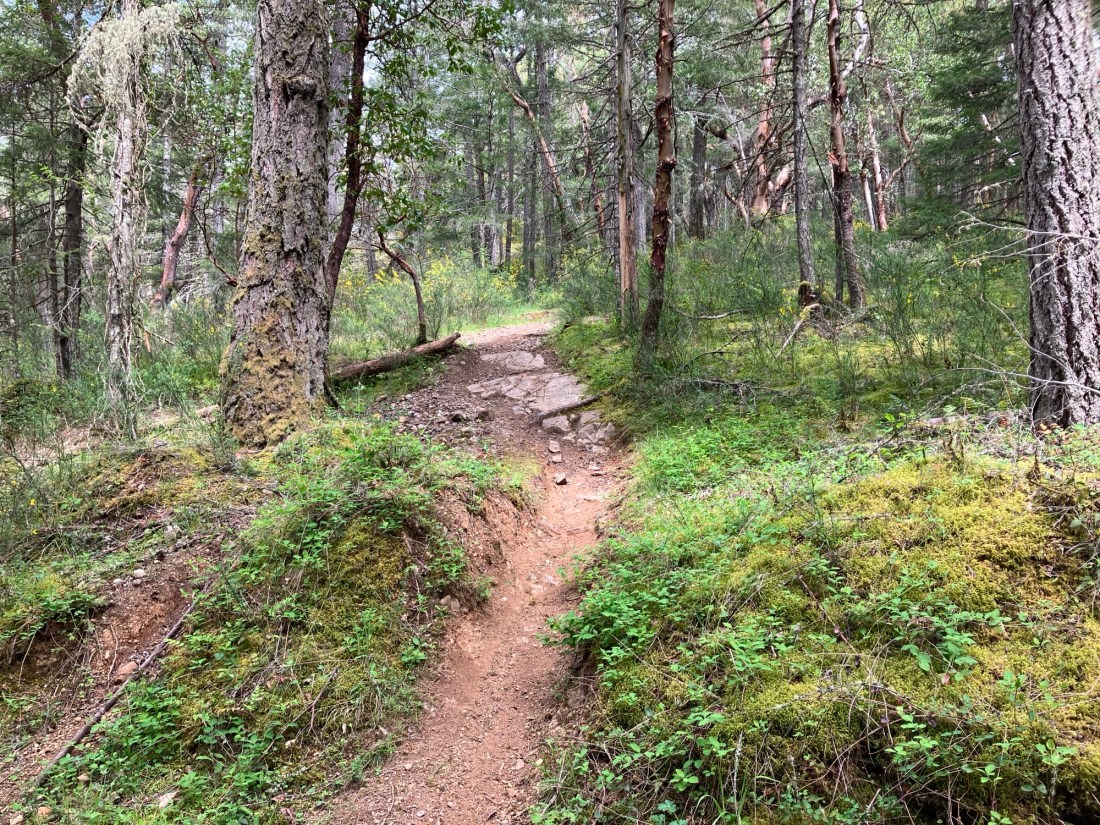
So, I walked, slowly and alone, on trails near our home.

Not my usual running trails.  For those I head uphill towards the Malahat mountain.  Between logging roads and side trails, I can choose at least a dozen different routes.

But I walked south.  Downhill.  Less choice.  Infinite beauty.

It wasn’t a perfect day for a walk.

It hailed minutes before I left, and rained on me the moment I left the house.  But without the music that usually accompanies me on my runs, I listened to rain pitter pattering on my jacket.  Minutes later the sun came out.  By then I was in the forest.  It was lush and green, and everything shimmered.  The shimmering stopped when the hail came again.  It pelted me before it turned to rain.

It was not a perfect day for a walk.  But if my legs needed the rest, my head needed the space, fresh air, and solitude.  It had been a challenging 24 hours as a dad.  And when I wasn’t focused on parenting, work usually found a way to slip through the cracks of my mind.

Running can be great in those moments too.  But running is different.  Running is always about getting from Point A to Point B and back again.  Running has a physical purpose:  intervals; long and slow; hill repeats.  Even when I’m just out for an easy run, there’s a purpose behind that run.  It’s part of a larger training program.

A walk is different.  There’s no set time.  No exact mileage I need to hit.  I walk to move and breathe and immerse myself in beauty. 

When I run, I barely ever stop.  Stopping defeats the purpose of the run.

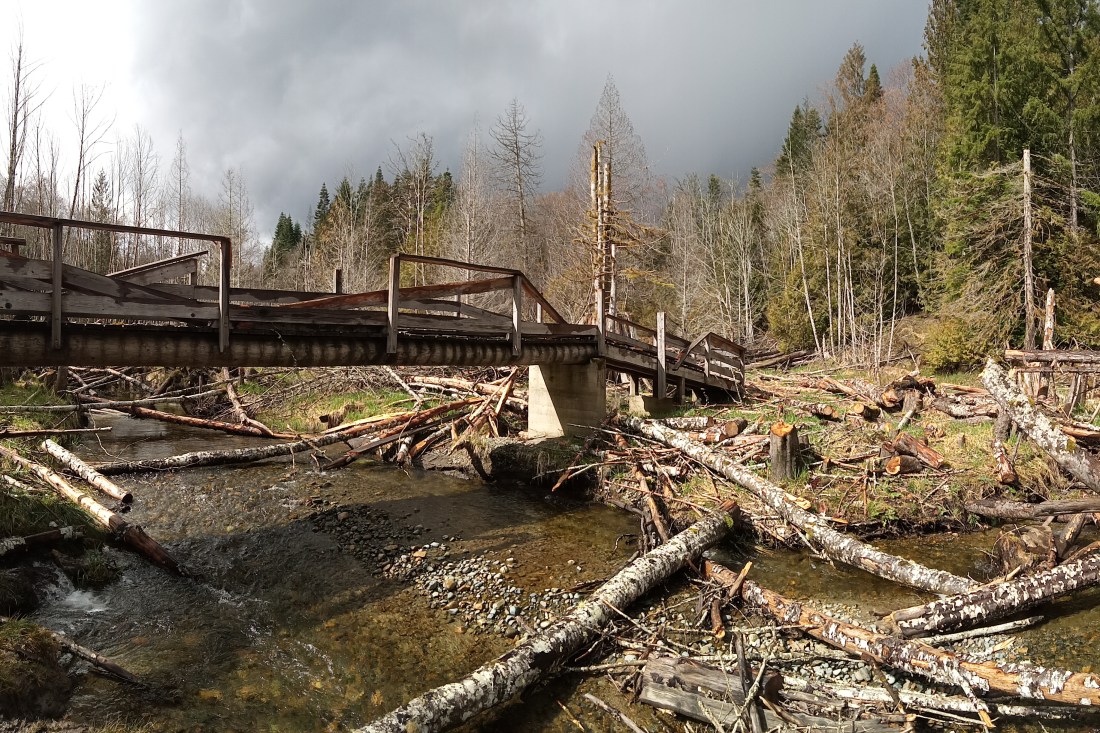
Walking is different.  I stop frequently.  At the edge of a cliff, or at the foot of a fallen tree.  I pause near a stream and listen to the water flow.  I step around a damaged bridge and wonder if it fell victim to ice and flooding, or teenagers and booze.

A few minutes after I’ve left the house, my daughter texts me messages of love and nonsense words.  I text back, and when the texts keep coming, I call her, tell her I love her, call her crazy, and say I’ll see her soon.  That wouldn’t happen on a run.   

Sounds, sights and smells are more intense on a walk.  There’s time to absorb them all, instead of running through them.  Walking is peaceful.  It is gentle on the body and gentle on the mind.   

I’m not looking forward to my 16-mile run.  The best part of a long run is finishing it.

I am looking forward to my next walk.  It might even happen later today.  I’ve invited my wife and daughter to come to the bridge with me.

It’s a perfect day for a walk. 

Even Freya

Featured

I’ve never written about Freya. 

She’s young, energetic, and getting fat.  When I wake up before dawn she follows me into the kitchen, meows at the pantry door, and fixates on her bag of cat treats until I open them and shake some on the floor.

Freya climbs up onto the bed and sleeps on my wife’s head.

Freya’s a little scared of my daughter and my daughter’s a little scared of her. 

We’ve had Freya for almost a year.  She makes me smile.  I love her.

But I’ve never written about her.

We live together but she’s on the periphery of my life.  I allot a small amount of my physical and mental energy to her. 

These few sentences may be all I ever write about Freya.

Yet she is a living creature.  In my home.  A creature whose fear when she first came here was so overwhelming, she hid behind a couch for days.  A creature whose capacity for love and attachment is so strong, she follows my wife throughout the house, day and night.

I take Freya for granted.  She adds happiness to my life, for a minimal price.

It’s easy to take things for granted.  Those things, big or small, that together, are the fabric of our lives.

In my last post, I wrote about how I was leaving the homicide unit where I’d worked for years.  I’m gone now.  And people keep getting killed.  The unit is very busy.  I know my friends are stressed and exhausted and giving everything, they have.  I spent a significant portion of my career working with them.  And now that I’m not, I think about them, especially when collectively, they are being pushed to the limits of endurance. 

Careers evolve.  I work with a new team now.  Uniformed officers on patrol in Victoria –  a city of extremes – where beauty and disorder co-exist.  Our team is filled with young men and women who are starting their careers.  They’re talented, enthusiastic and committed to the fundamental precept of policing – helping people.  Our team has veteran officers too – like me, these are cops with decades of experience.  We look at the ‘kids’ and we want them to have fulfilling careers and happy lives.  Their passion for the job is inspiring – it reminds us of why we signed up to be cops, years and years ago.  In turn, those of us who have been around for awhile, hope that the youngsters will benefit from our experience and example.  Maybe some lessons we learned will make things a bit easier for them.

One lesson I’ve learned is the importance of connection. My days, and nights, at work start with coffee.  Three or four of us get together.  We seek out quiet places, although, being in uniform, we always attract attention.  We huddle together around a table.  We laugh, plan the day, debrief things that have happened, talk about stuff that needs to get done.  Some of us have known each other for years.  Even so, this time together, coffee and conversation deepens those friendships.  Not everyone has worked together before.  We’re forming new connections.  Getting to know each other – professionally and personally.  In one breath we’re talking about sick kids.  A moment later it’s the robbery that the entire shift worked on the day before.

Those moments are precious and special.  When I’m at work I miss my wife and daughter.  I want to be with them.  But that time together with my friends and colleagues adds richness and texture to my life.  When I leave policing, those are the moments I will miss.

It’s all too easy to take life for granted.

I started writing this piece a couple of days ago.  This morning I woke up to learn that two members of the Edmonton Police Service had been shot and killed.  Two young men murdered on duty.  That’s seven cops killed across Canada in the last six months.  Murdered for wearing a uniform and doing their best to keep people safe.

Sometimes writing helps me make sense of things.  But there’s no sense to be made of these tragedies.  Good people die and the world keeps spinning. 

My house is chaotic right now.  My daughter is giddy.  A category 5 hurricane ripping through the house.  She’s chasing Freya.  I just heard my wife say, “don’t go near her!”  Category 5 hurricanes don’t respond well to direction.

My daughter is very excitable.  We’re different.  I like quiet.  I’m not a talker.  She’s the opposite of both of those things, even when she isn’t giddy.  To finish this piece, I had to walk away from her and close a door.

I worry that I take her for granted sometimes.  This beautiful, precious child, and sometimes I feel too busy, or too stressed, to just be in the moment with her and give her my attention.  When I choose not to spend time with her, I feel so guilty.  A little girl asks for her dad, and sometimes her dad says no.  Even when I’m doing it I feel awful.  Afterwards, I just want to be with her and throw my arms around her.    

Life happens every day.  The big and the small.  The things that happen to us, and the things that happen to others, hundreds of miles away.  It all affects us.

I feel tremendous sadness for those fallen officers.  For their families.  For their friends and colleagues. My heart is heavy.

And I’m thankful, so thankful, for the love in my life.  My family.  My friends.  Even Freya. 

.

Scattered Thoughts

Featured

I’d like to write more, but often I’m pressed for either time or ideas.  Sometimes a photo prompts my next piece. Usually something happens that I feel compelled to share.  When the ideas strike, the pieces often write themselves.  I’m just the conduit.  At least that’s how it feels. 

Today I have time but no ideas.  Photos but no stories behind them.  Many things on my mind, and none of them flowing through my fingers.  More like scattered thoughts colliding.

I’m fifty-one.  Maybe closer to death than high school.  I was thirty when I became a cop.  I remember driving home at the end of a nightshift, pulling into the driveway, and wondering: wondering when I’d feel like a grown-up, wondering when I’d feel comfortable in my own skin, wondering when the world would make sense.

The world still doesn’t make sense.  Yesterday in Buffalo, New York innocent people were slaughtered in a grocery store.  I grew up near the U.S. border.  My parents shopped at that grocery chain regularly.  The grocery store is called “Tops.”  I can still hear their jingle in my head “Tops Never Stops Saving You More.”

I’ve given up trying to make sense of the world. That’s not going to happen.  Which ironically, may be an important step in having a better understanding of myself.

I may not be there yet – understanding myself that is – but I feel like I’m on the right path. It’s only taken half a century.

Fatherhood has helped.  Not that it’s easy.  Every day I grapple with being a dad.  When to discipline?  How to teach life lessons?  What’s the best way to help an innocent child become a strong and confident girl?

Until very recently I listened to the Marathon Talk podcast.  The hosts embraced the notion of trusting the process.  It’s fine to have a goal, but the goal is secondary to the work you do along the way.  It’s the steps that matter, whether in marathon training, or raising a daughter.  Any goal is the product of the steps and moments that came before it.  Take your steps.  Live in the moment.  Keep your eyes on the horizon.  Never stop moving.

I became truer to myself when I stopped eating meat.  I eat a whole food plant-based diet because I believe it’s my best chance to live a long and healthy life.  There’s more to it than that – changing the way I ate showed me that, daily, my ideals and values could be in alignment with my actions.  That was a powerful lesson. 

Veganism led me to Rich Roll.   Rich chronicled his journey from addict to endurance athlete in his book ‘Finding Ultra.’  His podcast guests are leaders in their fields; health, neuroscience, athletics, and the arts.  Podcasts have reshaped the path I’ve taken in my life. They’ve changed the way I breathe, encouraged me to write, inspired me to wake up at 3:00 a.m. to run miles in the dark, and, conversely, prompted me turn my alarm clock off because sleeping may be the best thing any of us can do to promote physical and mental health. 

I used to have one or two books on the go at any one time.  Recently it’s been five or six.  Although the world doesn’t make sense, books help me navigate my way through it.  I’ve been reading about survival, hostages in Iran, a German general kidnapped in wartime Crete, the latest Reacher novel, a collection of essays from Jedidiah Jenkins, and Marcus Aurelius’ Meditations.  I read with a pen in hand, underlying meaningful passages.  I read with my journal by my side, and I copy especially meaningful passages into it.  Great writing moves me.  Incredible stories inspire me.  They all help me focus on my process and my path ahead.

My wife and I have a close friend whose mother is terminally ill.  Words so often fail in those situations.  So we sought the answer in words more eloquent than any we could ever express.  We sent a copy of Susan Cain’s latest book, ‘Bittersweet’ which is about grief.  Cain wrote ‘Quiet,’ a book about introverts.  It helped me better understand myself.  Without having read it, I know ‘Bittersweet’ will be an eloquent, thoughtful work which will help people all over the world.

I have a friend who did something special yesterday.  He ran one hundred kilometers in fourteen hours.  That’s more than two marathons.  He suffered.  He endured.  He finished.  His achievement was even more remarkable because of his training.  His longest training run was 10 kilometers.  He’s in excellent shape.  Obviously that helped.  But, on paper, no coach would draw up a training program without incorporating much longer runs.  On paper he should have done 20-, 30- and 40-kilometer runs.  He didn’t.  He didn’t need to. His mental toughness is off the charts.  He ran sixty-two miles yesterday with his mind. 

The mind.  That’s another thing podcasts have helped me appreciate.  The power of the mind.  To heal.  To create.  To help us reshape ourselves through meditation, and by visualizing the lives we want to lead.

Two more scattered thoughts.

Yesterday we adopted a kitten.  Her name is Molly.  Our daughter’s name is Molly.  We’re going to have to rename our daughter.

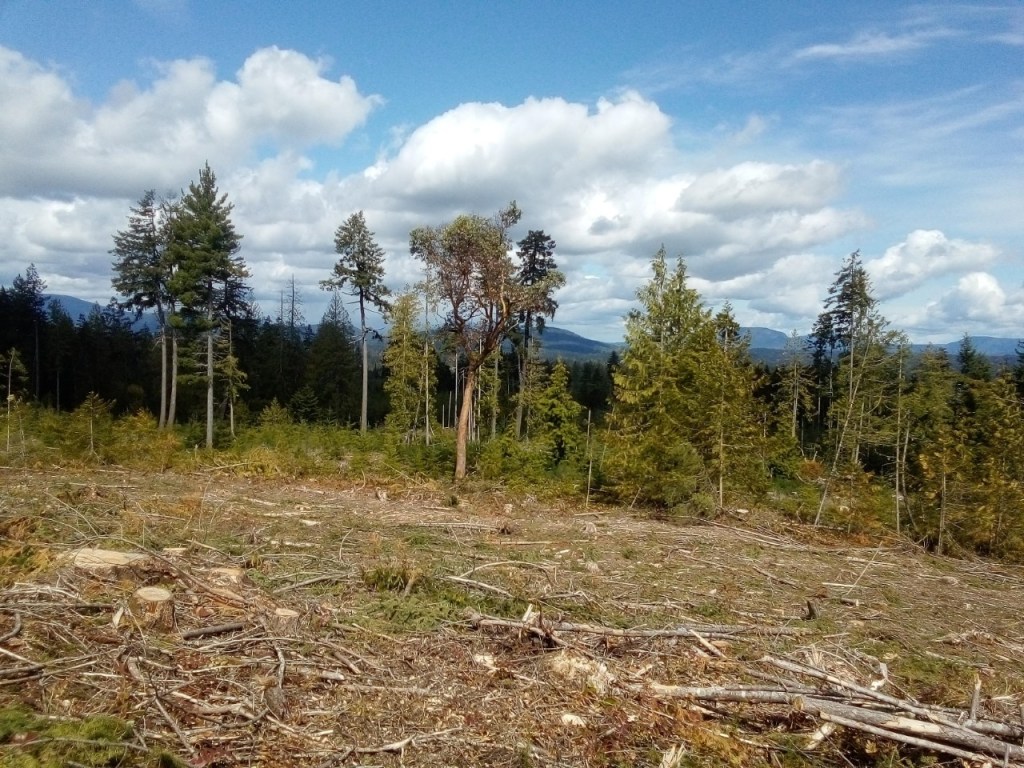
The pictures of the fallen trees are from a cutblock not far from our home.  I walked through it, and although it was undeniably apocalyptic, it wasn’t awful.  There was beauty in the desolation, and in the rich green forest behind it. 

Flat Miles

Featured

Flat miles.

There’s no such thing on Vancouver Island.  Up and down, up and down.  Every run is a series of ascents and descents. 

Southern Ontario is gloriously flat.  I took advantage of that a couple weeks back, when I was home, alone, visiting my family.  I logged a lot of miles.  It was easy to do.  I had lots of time, and few responsibilities. 

I ran every day, except one.

Things happened in Ontario.  And I ran.

That’s the thing about running.  It’s with you always.  Wherever you are.  A runner can always run.  A runner can structure his day around a run.  Or a runner can squeeze in a run even when the day is busy and unyielding.  A runner finds time to run.

And think.

I had lots to think about when I ran in Ontario.

My mom.  Recovering from a stroke.  Working so hard on her rehab. Moving so well.  Speaking so well. I was very proud of her.

My dad. We ran together.  That was special.  He’s been doing it for five decades.  Part of the first great running boom of the 1970s.  He’s nearing eighty and still running.  Runners run.

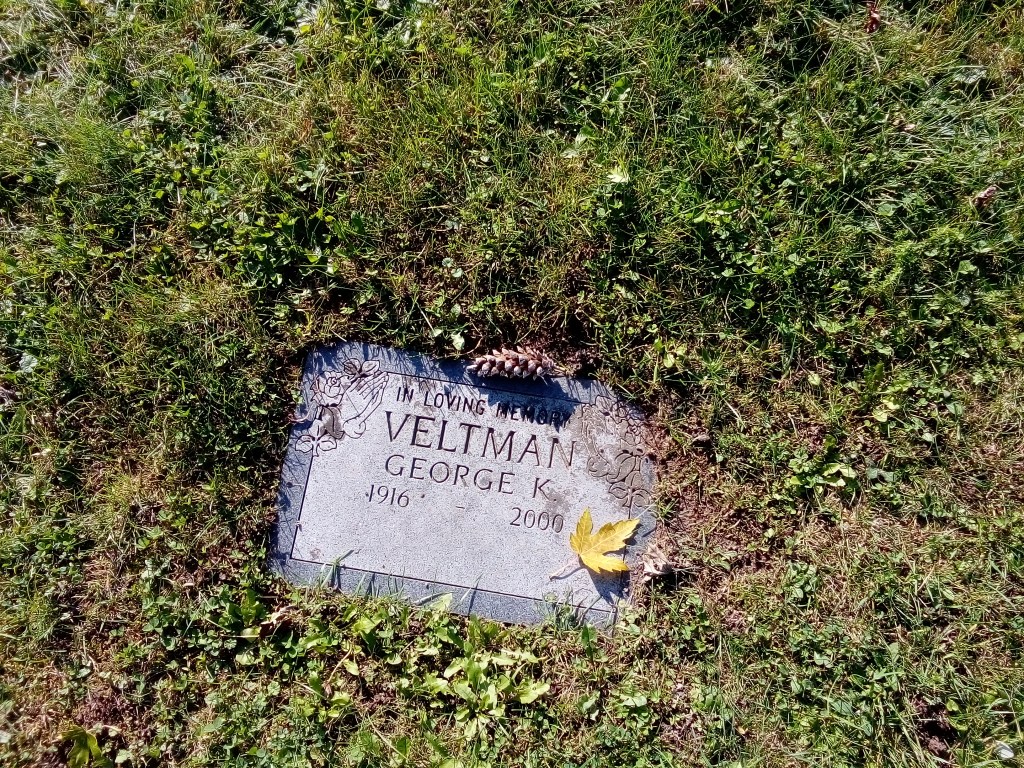
My grandparents. I visited my grandfather’s grave. Born during the Great War, he and my grandmother started their family during World War II, in occupied Holland. My mother and her twin sister were born as the Battle of Arnhem was fought nearby. A famous battle – The Bridge Too Far battle. My mother’s twin died shortly after she was born, in a starving nation, torn by war. My grandmother’s name is not on the gravestone. Her ashes were scattered elsewhere. In my memory, they are always together.

My wife and daughter.  They did not make the trip.  My daughter is too young to be vaccinated.  There was an emptiness to this trip home, because my entire family was not together.

Guelph.  A small-town in Ontario.  I miss small-town Ontario.  I miss the brick buildings, Main Streets, and cenotaphs in town squares.  I miss walking in a small-town.  I miss feeling I’m part of a small-town.  I didn’t realize how important it was to me until I left it behind.

ACAB. An Acronym for ‘All Cops Are Bastards.’  Spray-painted on the wall of a cake  shop in Guelph.  I know a lot of cops.  All cops are not bastards.  I thought about how widespread anti-police sentiment has become.  I thought about the assaults my colleagues in Victoria have been subjected to recently.  Serious assaults.  I thought, if the ‘C’ in the acronym was replaced with a letter that stood for a different group, it would be a hate crime.

People.  I didn’t fly home to wander through small-towns.  I went for people.  Like my wife’s best friend and her husband.  They have become my friends.  A trip back home without seeing them is unimaginable.  People I only met a few years ago, are now important parts of my life. 

Life takes twists and turns.  I had dinner with my ex-wife. For the last 18  months, she has been on the frontlines of the battle against Covid.  Her efforts have kept vulnerable seniors alive. She has endured immeasurable stress.  She’s led her staff through difficult times.  I am proud of her.

In life’s twists and turns, there are constants.  Like my brother, and his wife and their children.  They are proverbial rocks in my life.  We don’t talk often and see each other rarely.  And yet we are there for one another, with a closeness and comfort level that transcends distance and time. 

I thought about the people I did not see.  My friend Stitch.  A man who has suffered, and endured, and come out the other side.  Strong and resilient.  If I called him and said I needed him, he’d drop everything and fly across the country in a heartbeat. No questions asked.

I thought about some people I have not seen in many years.  Once good friends who I let slip away. 

These are some of the things I thought about when I ran flat miles in Ontario.  It was hotter than I would have liked.  No crisp cool autumn days. And the colours of the leaves were muted, not vibrant.

Runners run.

And runners think.

And when this runner arrived home, in rainy, hilly, British Columbia, he was greeted by a daughter who shrieked, “daddy,” and he was a hugged by a wife he loves and missed, and he was thankful for everything he has, and everything that was.

Scattered Bones

Featured

Evidence of a kill. 

At the end of a side trail, not heavily used.  I might have been the first person standing there in days, weeks – maybe even months or years.

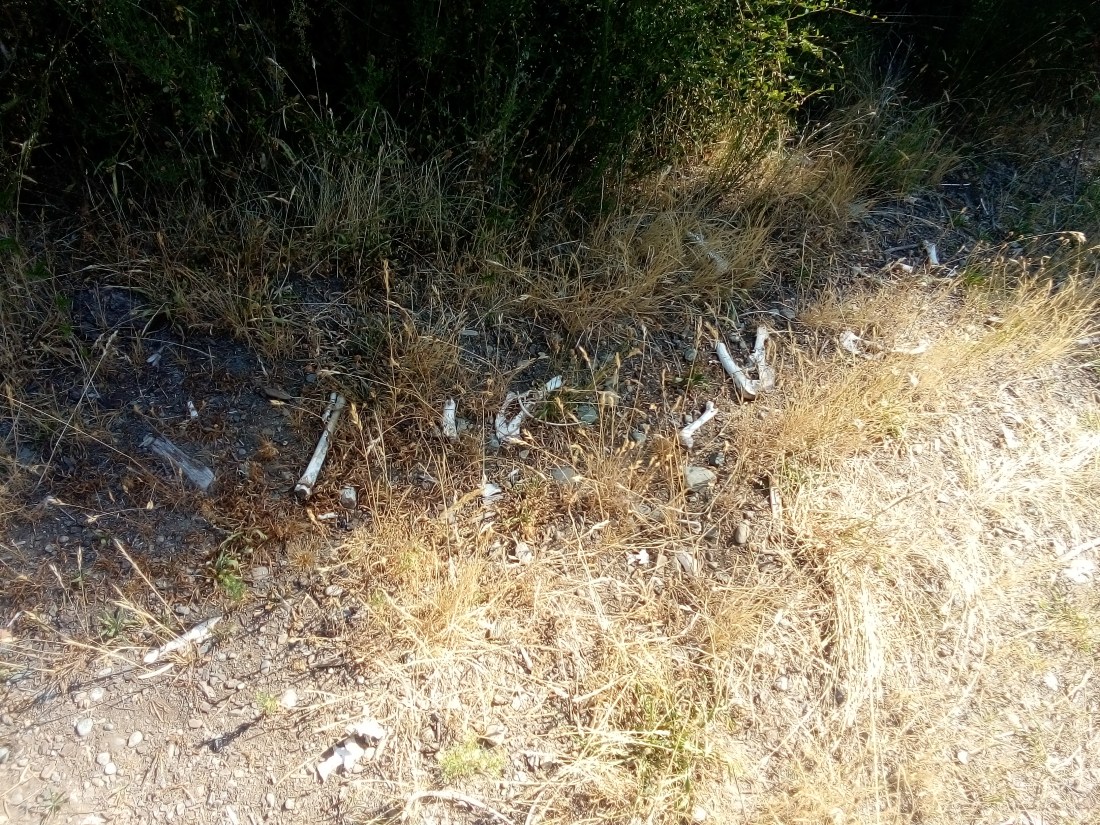
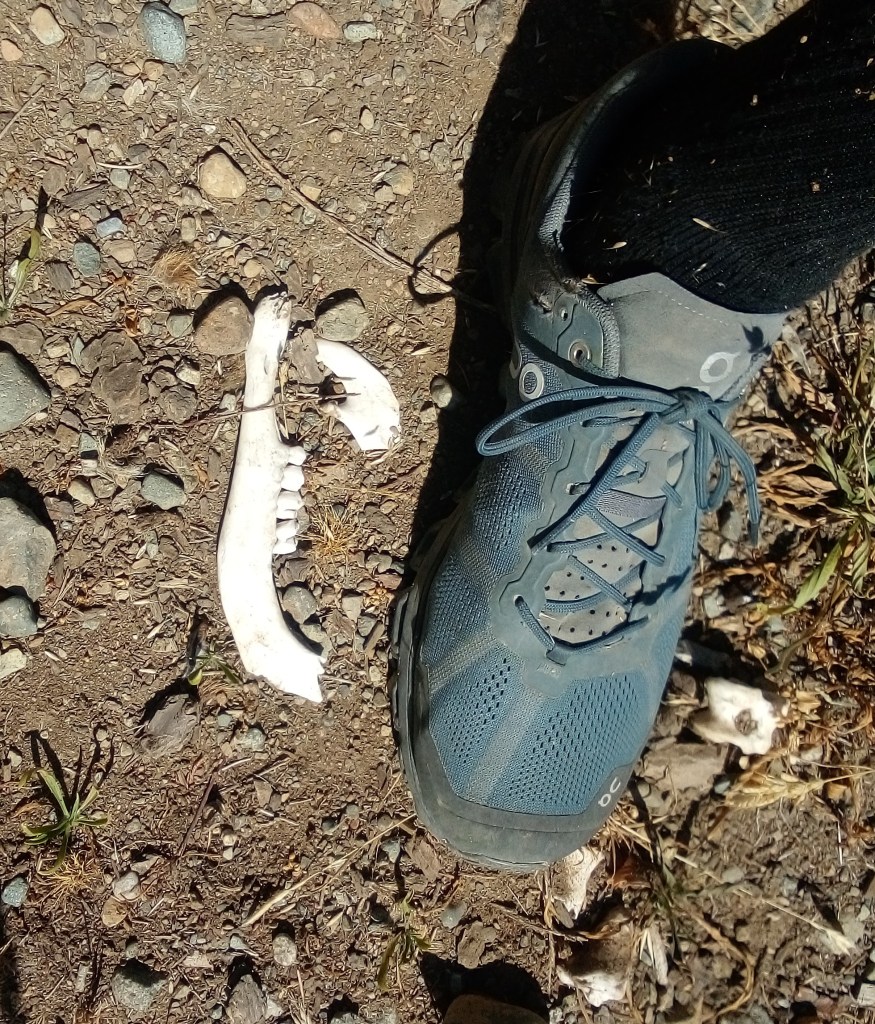
Scattered bones – bleached white.  A deer ripped apart, the spinal cord severed, a piece of a jawbone, a smattering of teeth.

An awful death.  Perhaps, mercifully, a quick one. 

A vivid reminder that our forests and trails, so near to our homes, are a different world.

I’d hadn’t gone this deep into the woods for weeks.  Since I’d seen a bear just minutes from our home.  That was six weeks ago.  On a well used trail at the junction of two paths.  If I left my home right now, I could be there in five minutes.  Or less.  My bear encounter happened at midday.  A warm day.  The perfect day for a quick workout.  Hill repeats.  Up and down, up and down.  Strengthen the legs, stress the lungs, tune out the world.  Music blasting in my earbuds.  I stopped tuning out when, on the last downhill, I glanced to my right and saw a black bear ambling up towards me.  Maybe 30 or 40 feet away.  A scenario I’d imagined a thousand times. I stopped running, pivoted, walked backwards down the hill.  Slowly.   Yanked out my bear spray.  Pulled the cord on the noisemaker clipped to my chest.  Knew in my head that black bears rarely attacked people.  Feared in my gut that this one would.  Kept retreating.  Got to the bottom.  Saw the bear at the top.  It looked at me, curious and calm.  And kept on going, towards the woods, away from me.

A few days later, I ran again on the same hill.  Head on a swivel.  No music in my ears.  A little scared, but knowing the longer I waited to go back, the less likely I would be to do so.  Still, that was close to home.  Close meant comfort.  At the junction where I’d seen the bear, I could see dozens of houses and cars passing below.  It was practically my backyard.

The side trail with the dead deer was not my backyard.  I’d planned this run for days, and then talked myself out of it the night before.  Because I was scared.  Scared to venture far from home.  Far from houses and cars and a pretty subdivision.  Into the land of cougars and bears.  I talked myself into a safer run.  Along well traveled roads, to a public park filled with hikers and mountain bikers. 

Then I woke up.  And talked myself out of the talking out. 

Maybe it was because an article from a trail running magazine popped up on my Twitter feed with an article about the rarity of bear attacks and the effectiveness of bear spray.

Maybe because I thought of my daughter.  The fears of a five-year old can be overwhelming – unfamiliar situations, unexpected change, a bug on our trampoline – overwhelming and every bit as real and powerful as the primal fears of an adult.  When my daughter is scared, my wife and I encourage her to face those things that frighten her.  To gain strength, incrementally, by winning small battles against little terrors. 

Or maybe it was just because I love to run on hard packed dirt, baked dry by a month of heat, in the midst of towering, never-ending evergreens.

So, I went for that run.  I added a knife to my arsenal.  Razor sharp, encased in a multi-tool which I carried with me for the entire run.  The multi-tool in one hand, a rock in the other.  I banged them together frequently.  “Make noise,” the experts say.  Scare the bears off before they see you. 

I made noise all right.  No earbuds on this run.  Blue Rodeo blaring from my cell phone.  My rock smashing into my multi-tool whenever I approached a blind corner.

I made noise, and scared a lot of birds, who flew off as I approached. 

I don’t know if I scared any bears, or cougars.  I certainly didn’t see any.

But I smelled death.  The unmistakeable odour of decomposing flesh hit me hard.  Twice.  The rotting carcasses must have been just meters off the main path that took me further and further out. 

Further and further out to the side trail, which ended with scattered bones and an awful death.

An awful death and a necessary run.

A run that replaced fear with confidence.

A run that reminded me of why I was scared in the first place.

The Hard Miles

“The hardship of running somehow softens the hardship of life.  Running turns the madness into music.”

Those words, from the foreword to Phil Hewitt’s ‘Outrunning the Demons’ capture the essence of this book – Life is hard.  Running helps.  Hewitt himself was stabbed, beaten and left for dead alongside a South African highway.  He survived.  Running helped.

And inspired him to collect the stories of others who, in their darkest hours, found solace in running.  People shaken by grief, addiction, disease, injury, and mental illness – in the worst of their pain, running helped them survive.

As is often the case, I write this on the couch, my daughter beside me.  A mini-crisis has just passed.   Strawberry yogurt everywhere.  “Oh no, I got some on my pajamas,” she yelled.  A very big deal for her.  Less so for me.  I responded that if yogurt spilled all over the sofa, and covered her and painted the ceiling, it would be okay.  We would fix it.  We would survive a Yogurt Disaster

As the yogurt spill played out, I looked out our front window and saw a runner, in her bright yellow vest, racing along a path near our home.  I know her.  A little.  She runs every day.  I’ve seen her running in deep snow on days when I struggled for hours just to shovel our driveway.  In winter’s darkest days she is out there – in driving rain and howling winds.  I don’t know her story.  But I suspect she needs running.  Needs it just as much as food, and water and air. 

That’s how I feel too.

Not many years ago, someone very close to me was diagnosed with cancer.  I was terrified she would die.  It was a bad year.  Stress, worry, uncertainty and fear churned within.  So I ran.  Signed up for a marathon and trained for it not because I wanted to.  I had no time goal.  The distance was no great challenge.  I’d run marathons before.  I entered that marathon because I needed to.  A lot changed in my life that year.  But running was a constant that helped see me through the worst and emerge on the other side.   

The other side is a new life.  A life that might be very similar to yours.  A spouse, a child.  A career with constant stress, modulating daily, sometimes hourly, from moderate to severe.  Always present and always a roller-coaster ride. 

Yesterday was Easter.  My wife and I watched a day of joy unfold as our daughter hunted Easter eggs.  We watched as her grandparents and aunt showered her with love, and chocolate, and placed a pink Easter bonnet on her head.

And there was sadness too.  My parents are a long way away.  So is my youth.  I remembered Easter when I was a child.  Chocolate and church and sunshine.  Yesterday I wanted to hug my mom and dad and my brother and his family.  And be with them and tell them how much I love them.  And thank them for those wonderful memories.

One of those memories is music.  “Morning has Broken.”  A song for the ages.  A song that captures light and life and spring and sunshine.  An Easter song.  So yesterday, in the midst of it all, on a bright beautiful April day, I ran to the trails and listened to Cat Stevens sing that song.  I played it over and over again.  I found a valley and a lone daffodil.  Just the one, in a sea of grasses and weeds.  And I thought about it all.  And was thankful for everything.  Joy and youth, light and life, family and friends. Running and hard miles.