November rain didn’t fall on Vancouver Island this year. At least, not as often as it usually does.
Instead, our days have been cold and clear.
The nearby trails have been icy instead of muddy.
I’ve needed sunglasses more than a rain jacket.
Those trails have been a lifeline over the last few months. Our family has experienced two significant health challenges. In both cases, the worst may be behind us, however, the stress has been significant and ever present. And it continues.
At the best of times, November darkness and gloom weighs me down. This November was not the best of times.
The sunshine couldn’t have come at a better time.
But the days are short, and the sun is low – very low – in the sky. And that has affected my runs.
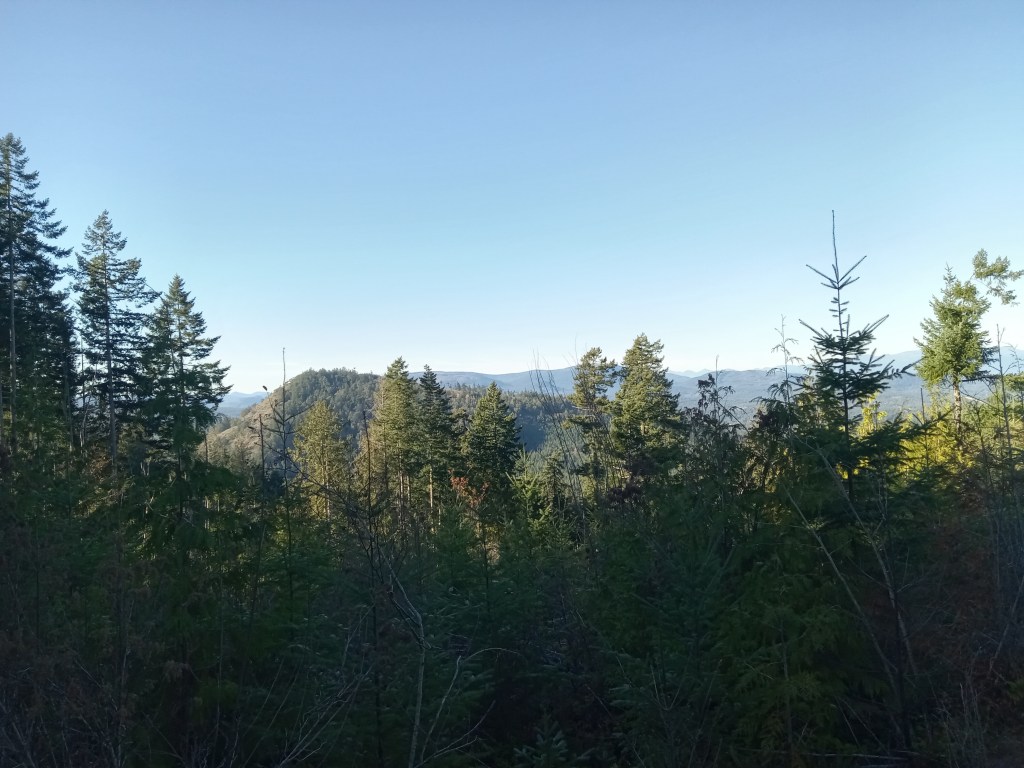
I’ve been exploring near our home. Trails I have never gone down before. Heights I’ve never reached. Views I’ve never seen.
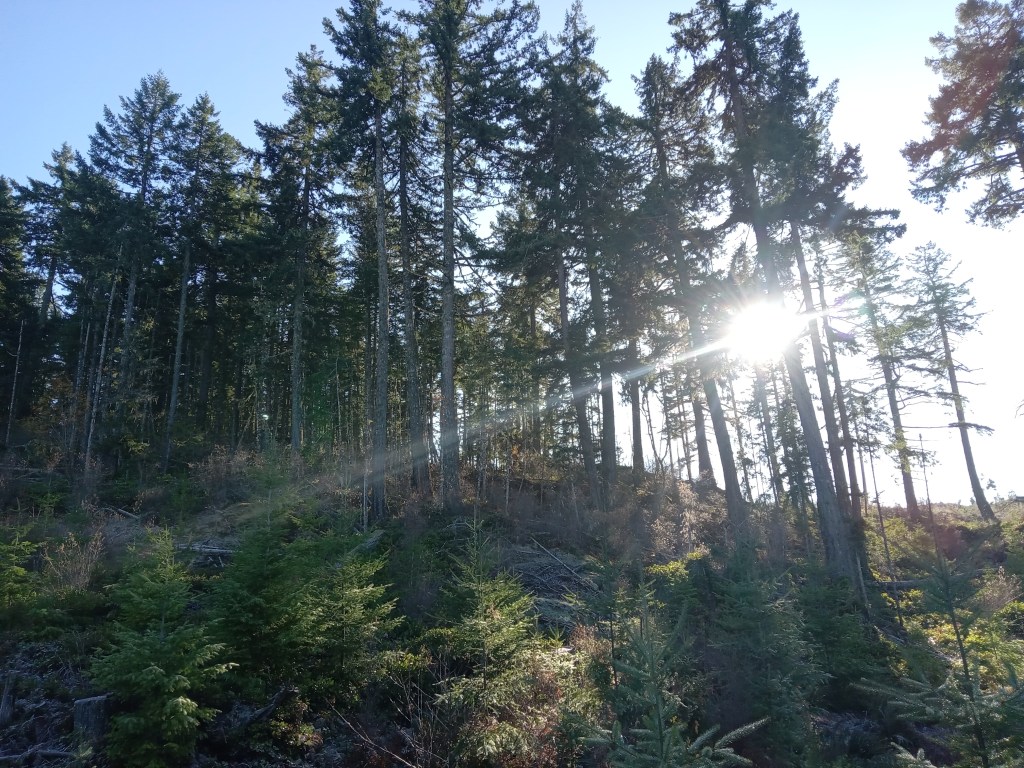
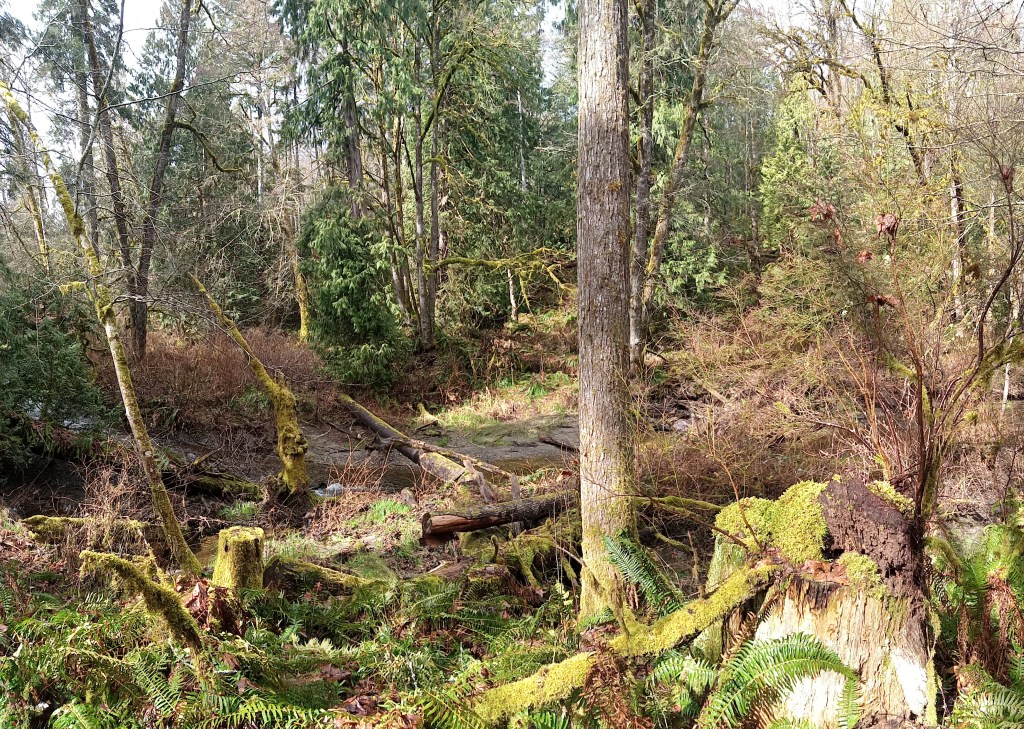
So often, over the last few weeks, I’ve turned a corner and found sunshine streaming through canopies of green. Shade surrounds me, yet the light streams through, and, behind it, the sky is as blue as the air is cold.
The light that makes it through is indescribable and special. It’s ethereal. Almost holy.
It stops me in my tracks. I breathe it in.
And I stop running, pull my beat-up old phone out of my running vest, and take photos which don’t do justice to the beauty of what I’m experiencing.
As is so often the case, I’m writing this on a Sunday morning. One floor down, my daughter plays her electronic piano and sings ‘The Twelve Days of Christmas.’ I’ve never heard her do that before. Her singing is more precious to me than the light streaming through the trees. More precious than anything.
The rain was late but it’s here now. An ‘atmospheric river’ hammering the island. The sun won’t be shining through the trees today.
Maybe that’s a good thing. If it happened every day, it wouldn’t be special. It wouldn’t be magical. It wouldn’t remind me that light pokes through.
Midway through the last long weekend of the summer, our neighbourhood was still and quiet. People were camping and travelling – the last flurry of activity before school started. I was also still and quiet which allowed me to hear sounds hidden in the background – birds, a neighbour tinkering, a dog barking. Nothing moved except trees and bushes swaying in a gentle breeze. The air was warm even though it was early evening. I sat on our front porch, hidden from view behind lush leaves and pink flowers. My wife sat beside me, a glass of wine in her hand.
Our home is usually a cacophony of sound – often emanating from, and around, our daughter. She is rarely still or silent and her presence envelops my wife and I in her world. But that Saturday night she stayed with her grandparents and her aunt. The timing was good. I love her more than anything in the world. Even so, she drained me that day – physically and mentally, and my dad battery ran low.
Two days have passed, and now it’s Labour Day. The unofficial last day of summer feels like the unofficial first day of fall. I’m back on the front porch. There’s no warmth in the air. Grey clouds hide blue sky. It’s not quite as quiet. Kids have returned to the park across the street. Distant traffic is louder. A pink pick-up truck I’ve never seen before just drove by our home. There’s gloominess in the day, or in me, or in both.
We all grow up returning to school in early September. It’s familiar and comforting. I live it now through my daughter’s eyes and her emotions – an amalgam of nervousness, fear and excitement. My little girl, who once weighed less than four pounds and spent her first few weeks in an incubator in an intensive care unit is about to start Grade 2. It’s a mix of emotions for me too. Gratefulness for her sheer existence. Wonder and awe as I watch this little person grow and develop and change every single day. Thankfulness that she is still young and naïve and plays with dolls and loves mermaids. Concern for her gentle soul as she grows up in a world where not everyone is fundamentally kind, or inherently decent. I remind myself that most people are good most of the time.
Many of those good people live in our neighbourhood. Kindness abounds and is often centered around our daughter. We returned from a walk this morning to find a bag of cookies on our doorstep, made for her by a thoughtful woman who is a masterful baker and gracious person. We were returning from that walk because we’d borrowed ‘Skye,’ a little terrier whose owners allow us to walk their dog, to help my daughter overcome a fear of dogs. Our living room now has a miniature dollhouse thanks to another neighbour who needed to find a home for his 98-year-old mother’s family heirloom. That this man thought of my daughter and reached out to us so she would have that dollhouse meant the world to me. Several weeks ago, our family “camped,” when a good friend parked his 40-foot motorhome in our driveway for the weekend. His generosity made for sheer joy for my girl who is desperate to camp, and saddled with parents who are not desperate to camp. Roasting marshmallows in our driveway was as special to her as a trip to Disney.
This morning I contemplated leaving our neighbourhood. After we’d walked the dog and found the cookies, I hopped in my car to drive by a house for sale. It’s not far away. Ten minutes maximum. But the home is on a steep hill, in a subdivision built on a dramatic incline. The subdivision has beautiful homes, many with ocean views. The home I drove by is newer than ours. It’s bigger. It’s near a pathway that leads to the ocean. I miss living a short walk from the ocean. I tell myself that I should “want less” and I know there is much truth and wisdom to those two words. Yet, I’d like to live in a home that’s a little bigger, with a yard that is a little smaller, and needs less care.
I wrestle with what’s the right thing to do. What’s the right thing to want – or not want. When I drive in that area, when I walk in that area, it does not feel like a neighbourhood. It feels like a collection of houses that happen to be in the same location. The steepness of the streets make it so much less walkable than where we live now. And walkability breeds contact and conversation – kindness and friendship.
There is so much value in taming our desires and being grateful for those things we have. I would miss this neighbourhood so much if we ever left it. I do feel drawn to the ocean. It has always had an almost mystical allure for me. But if we moved to be closer to the Pacific, I would leave behind the trails, hills, and mountains which are so close to me now. I can run from my home, and, in less than five minutes, be totally alone in nature. That is another gift which our neighbourhood gives me, every single day.
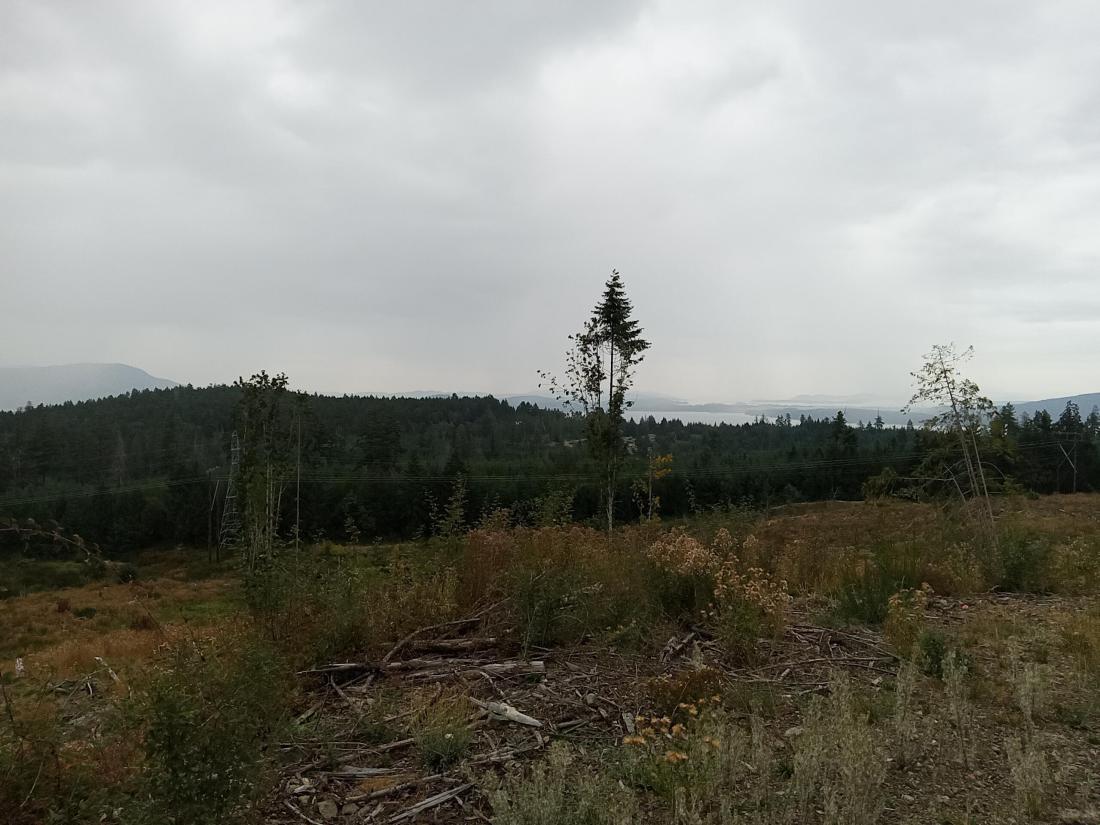
Yesterday, I hopped on my bike and escaped high up in the forest. I rode, and hiked, and found myself alone, and elevated, surrounded by acres of trees, with a spectacular view of mountains and the ocean. Maybe that’s all the ocean I need.
It’s still Labour Day. It’s still gloomy. And I’m still on the front porch. I hear a basketball bouncing. I see children riding their bikes. I know school lunches are being made, and backpacks being packed. And I’m thankful for where I live and the people around me.
I turned seven in 1977. Toronto Blue Jays’ bleacher seats were two dollars. Jimmy Carter was President. A soldier who’d fought in World War I and World War II visited our home.
My dad turned 7 in 1950. Harry Truman was President. The Korean War began weeks after my father’s birthday.
My Dutch grandfather turned 7 in the 1920s. Born during the Great War, that 7-year-old boy did not know that he would live under Nazi occupation and that his daughter, my mom, would be born as fighting raged around them.
I have no idea when my great-grandparents turned seven. It must have been in the late 1800s. I know nothing about them. They are as mysterious to me as medieval peasants. Their lives mattered. And they are invisible to history.
Last year, a friend at work gave me a copy of Marcus Aurelius’ Meditations. A pillar of Stoicism, Aurelius and the Stoics encourage us to recognize and embrace our impermanence.
I think about impermanence daily. I always have. But becoming a dad heightened that tendency. Being a dad is like impermanence on steroids. Every day my little girl grows up a little more and becomes less of a little girl.
She talks a lot. Like when I’m sitting on the couch, trying to write this. Part of me, inside, screams in frustration, yearning for silence so I can concentrate. And yet, every word is precious. Every silly, nonsensical thing she says, like, “what squishy butt isn’t marshy.” (The answer is marshmallow).
Impermanence is everywhere. Yesterday I found a photo of myself from almost ten years ago. I looked at it and thought, ‘I look pretty much the same’. I showed it to my wife and she said, “You look so young!”
A few months ago one of my favourite trails was closed when an old-growth fir tree toppled in a windstorm. For years, that tree had clung to the side of a hill. It was massive and precarious, leaning at an angle that suggested it would fall any moment. It did not surprise me that heavy rain and high winds sent it crashing to the ground. It may have been hundreds of years old.
Last fall I planted a sapling in our backyard. It didn’t survive the winter.
Marcus Aurelius wrote, “Our lifetime is so brief … Consider the abyss of time past, the infinite future. Three days of life or three generations; what’s the difference.”
I’ve gravitated to the trails over the last few years. In part, it’s because the dirt paths are much gentler on my aging joints than unforgiving pavement. But there is more to it. Our forests are a never-ending reminder of impermanence.
Stoicism invites us to put impermanence front and center in our lives. To live neither in the past, nor in the future, but in the moment. It is not a cliché to say that this moment, is all we truly have.
And yet these moments span generations. I look at a picture of myself beside the fallen tree and I see an expression I recognize as my father’s in my own face.
This morning my daughter commandeered a bathroom. She put a “Keep Out” sign on the door and told us she was turning felt into silk. She called out for purple and yellow markers, scissors, and tape. After thirty minutes she emerged and handed me a paper tie to wear when I dress up to go out for dinner tonight. On the tie she’d written “you are the best dad ever.”
My daughter is seven. This morning, for a moment at least, I was the best dad ever. I know that too is impermanent. A few years from now, a teenage girl may feel dramatically different about her father.
Stoic philosophy reminds me to accept and embrace the reality that trees grow and trees fall. Daughters are young and silly and daughters grow up. Dads age, and dads hobble and dads look more like their own fathers. Each of those moments is all that we have. And yet, those moments bind us to the past and anticipate our impermanent futures.
Yesterday I ran for 30 minutes, and my legs felt like they were encased in concrete.
Tomorrow, I have to do a 16-mile run.
Today my legs needed a break.
So, I walked, slowly and alone, on trails near our home.
Not my usual running trails. For those I head uphill towards the Malahat mountain. Between logging roads and side trails, I can choose at least a dozen different routes.
But I walked south. Downhill. Less choice. Infinite beauty.
It wasn’t a perfect day for a walk.
It hailed minutes before I left, and rained on me the moment I left the house. But without the music that usually accompanies me on my runs, I listened to rain pitter pattering on my jacket. Minutes later the sun came out. By then I was in the forest. It was lush and green, and everything shimmered. The shimmering stopped when the hail came again. It pelted me before it turned to rain.
It was not a perfect day for a walk. But if my legs needed the rest, my head needed the space, fresh air, and solitude. It had been a challenging 24 hours as a dad. And when I wasn’t focused on parenting, work usually found a way to slip through the cracks of my mind.
Running can be great in those moments too. But running is different. Running is always about getting from Point A to Point B and back again. Running has a physical purpose: intervals; long and slow; hill repeats. Even when I’m just out for an easy run, there’s a purpose behind that run. It’s part of a larger training program.
A walk is different. There’s no set time. No exact mileage I need to hit. I walk to move and breathe and immerse myself in beauty.
When I run, I barely ever stop. Stopping defeats the purpose of the run.
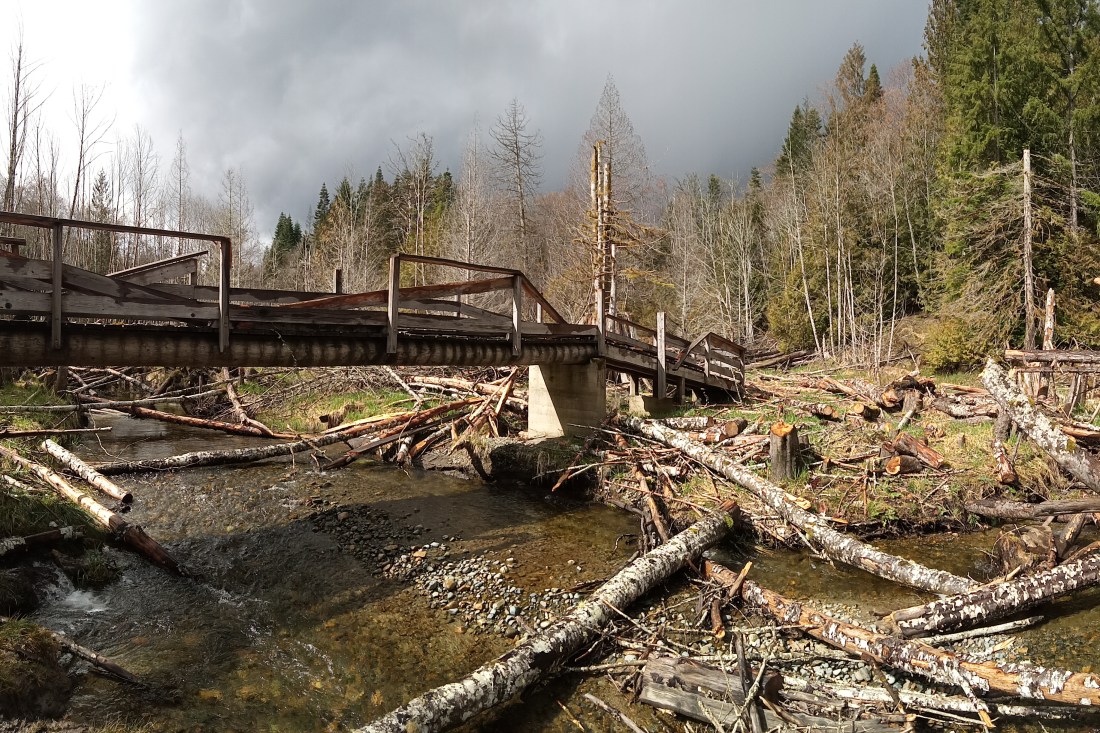
Walking is different. I stop frequently. At the edge of a cliff, or at the foot of a fallen tree. I pause near a stream and listen to the water flow. I step around a damaged bridge and wonder if it fell victim to ice and flooding, or teenagers and booze.
A few minutes after I’ve left the house, my daughter texts me messages of love and nonsense words. I text back, and when the texts keep coming, I call her, tell her I love her, call her crazy, and say I’ll see her soon. That wouldn’t happen on a run.
Sounds, sights and smells are more intense on a walk. There’s time to absorb them all, instead of running through them. Walking is peaceful. It is gentle on the body and gentle on the mind.
I’m not looking forward to my 16-mile run. The best part of a long run is finishing it.
I am looking forward to my next walk. It might even happen later today. I’ve invited my wife and daughter to come to the bridge with me.
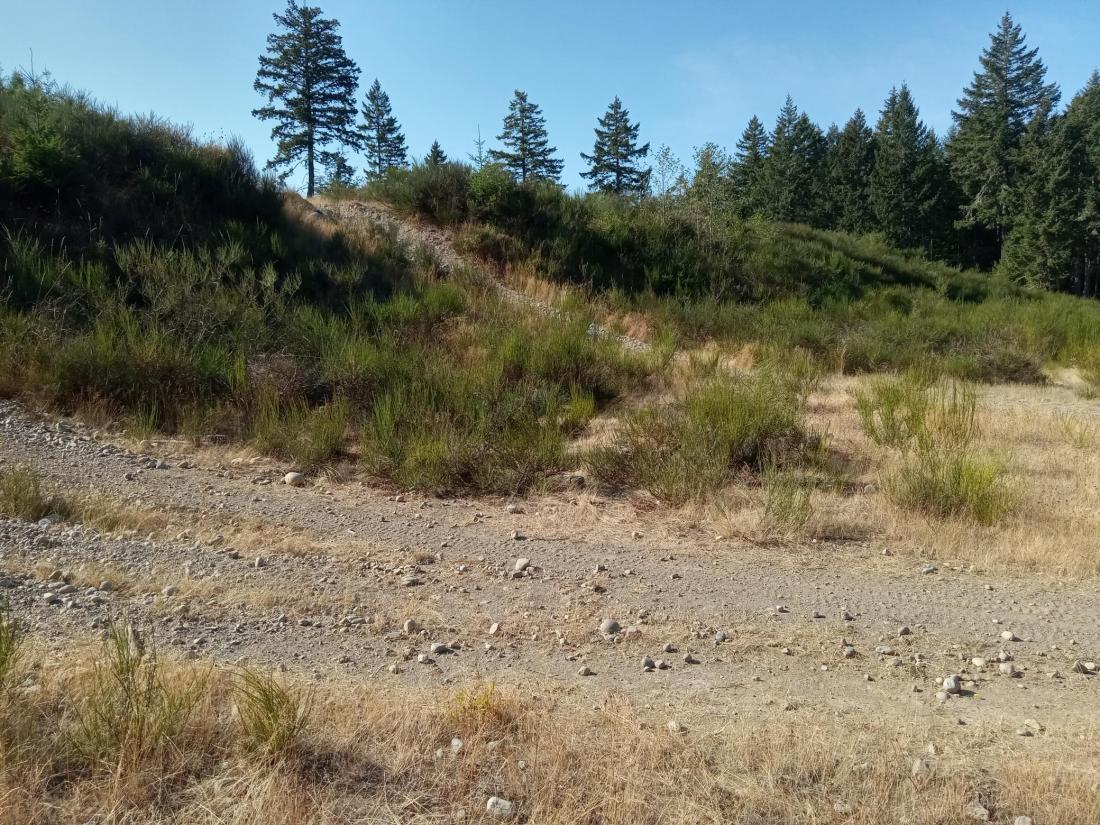
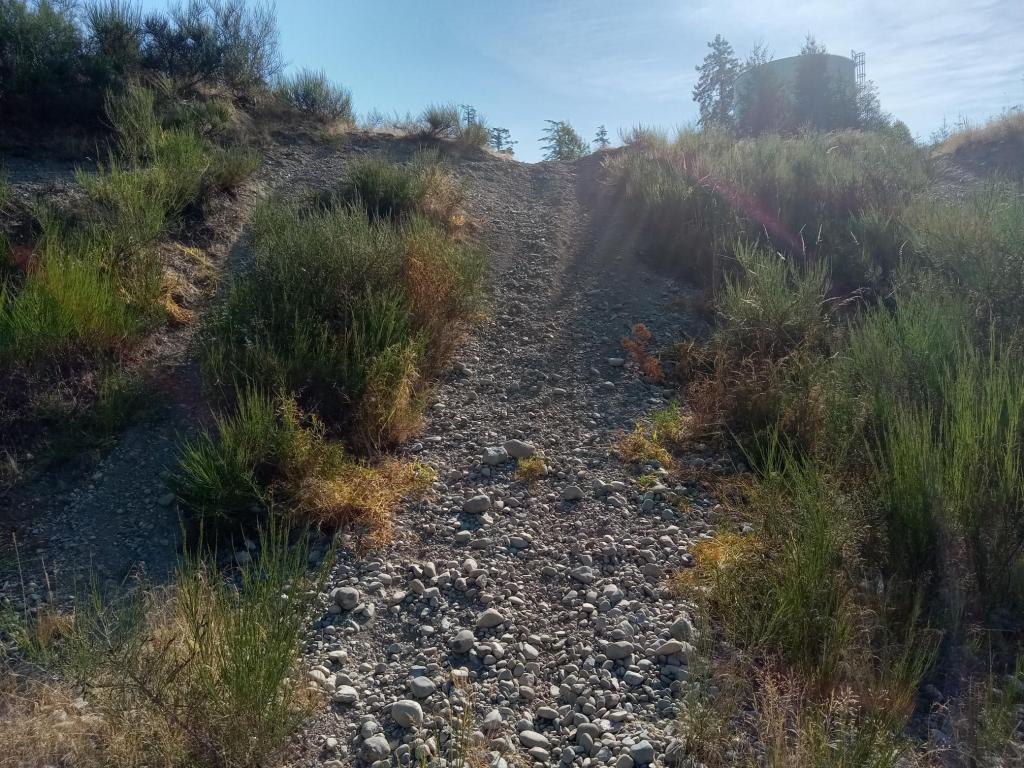
It hasn’t rained for months and the trails I love are dust not dirt. Steep inclines are virtually impossible to climb, because the ground falls away. Downhills are treacherous because my trail shoes have nothing to grip. It’s like sliding down a sand dune at the beach. Every run is hot, with the sun beating down, and radiating back up. I finish every workout filthy, covered in sweat and grime. And I love it. I love overheating, and being dirty, and dropping to the ground mid-run to crank out some push-ups, and then getting back up looking like Pigpen from Peanuts.
The trails I love are so close to my home I can be there in minutes. Hundreds of people live around them. And I almost always have them to myself. They feel like my special place. My little secret. I go there to train hard. I lift rocks, and logs. I run with them. I carry them. I squat them. I don’t need to pay for a gym. More weight than I could ever lift lies on, and around, the trails I love.
Last year I saw a bear. It was only about fifty feet away. I was scared, but I stayed calm. I backed away slowly. He, or she, took little interest in me, as it lumbered along its own trail, at its own pace. I barely merited a sideways glance. Every time I go out to the trails I love, I wonder if I’ll see a bear. I don’t want to encounter one. And yet, a part of me always hopes I will see one again. From a distance of course, and a perfectly safe vantage point. A bear that’s disinterested in me. A bear that lets me revel in the majesty of one of Creation’s most incredible creatures.
I was home alone when the Queen died. I was shocked, and a little numb. I had never known a world without the Queen. So, I walked to the trails I love, and I sang “God Save the Queen,” to myself, and I was thankful for a woman who lived her life with grace and dignity. I remembered that she was not perfect, which reminded me that none of us are. Perfection is an impossible legacy. Dedication, fortitude, service to something bigger than ourselves – those are obtainable – not easy, but obtainable. The Queen showed that for over seven decades. She gave us all something to try and emulate.
I’d give anything to do a hard workout on the trails that I love. It’s been a while. But my body can’t. I was part of a team of law enforcement officers that ran 129 kilometers in three days last week to honour peace officers killed in the line of duty. It was a very special, very sacred, event. It was also an event I started with a sore knee. A mildly sore knee. A doctor or physiotherapist probably would not have said, “the best thing for your knee is to run 80 miles, mostly on pavement, over three days.” Now almost a week after the run concluded, my mildly sore knee, is constantly hurting. I’m not in agony, I probably won’t need surgery, but something’s not right. Doctor Daryl tells himself that rest and stretching will do the trick, and, in a week or so, all will be right with my left knee.
Even if my knee wasn’t hurting, I still wouldn’t be running. Thanks to Covid. I tested positive a few days ago. It hasn’t been awful, but it’s affected me. A laundry list of mostly mild symptoms: weariness, coughing, loss of taste, night sweats, something going on with my right eye. I have nothing to complain about. I’ve improved daily. And my path to normal began yesterday when I left the house for the first time in three days to walk on the trails I love.
In a few weeks, November rain will arrive, and the same trails will be flooded. The days will be grey, and I’ll return from runs sopping and caked in mud. I will gripe about our wet winters and the lack of sunlight. But the trails I love will remain beautiful. Shine or rain, they exude stillness and peace, bring comfort, guide me towards stillness, and help me be my best self.
The trails near our home are open to everyone. The backcountry beckons. I run while others mountain bike, hike or walk their dogs. Some ride their dirt bikes or quads. Sometimes when I run, I hear their engines roaring in the distance. When we cross paths, I breathe exhaust fumes instead of fresh air.
But the forest and trails are vast and my encounters with motorized vehicles are always fleeting. I wave or nod to the riders as we pass one another. We have different interests but a shared love of the outdoors. We mean one another no harm.
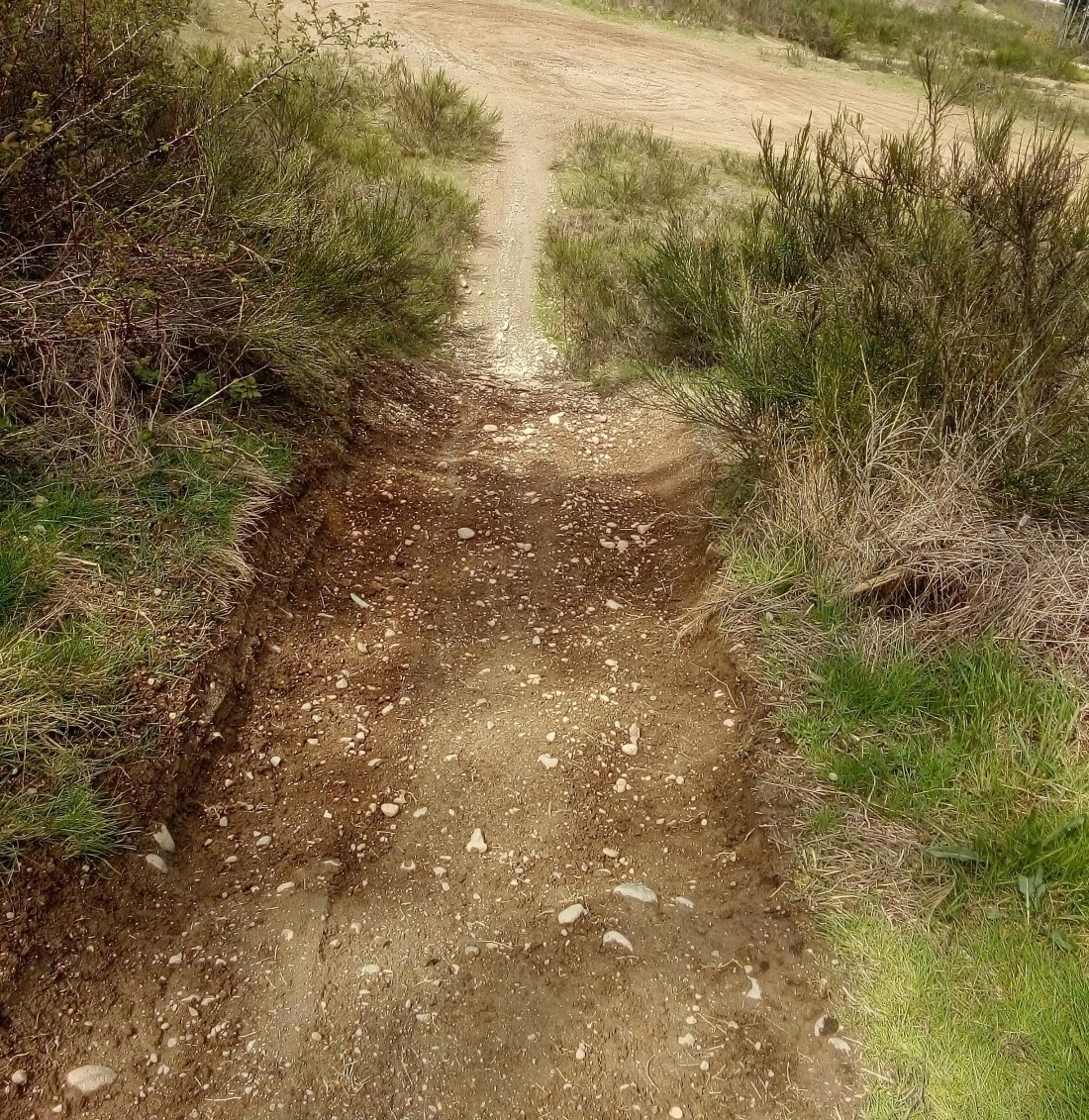
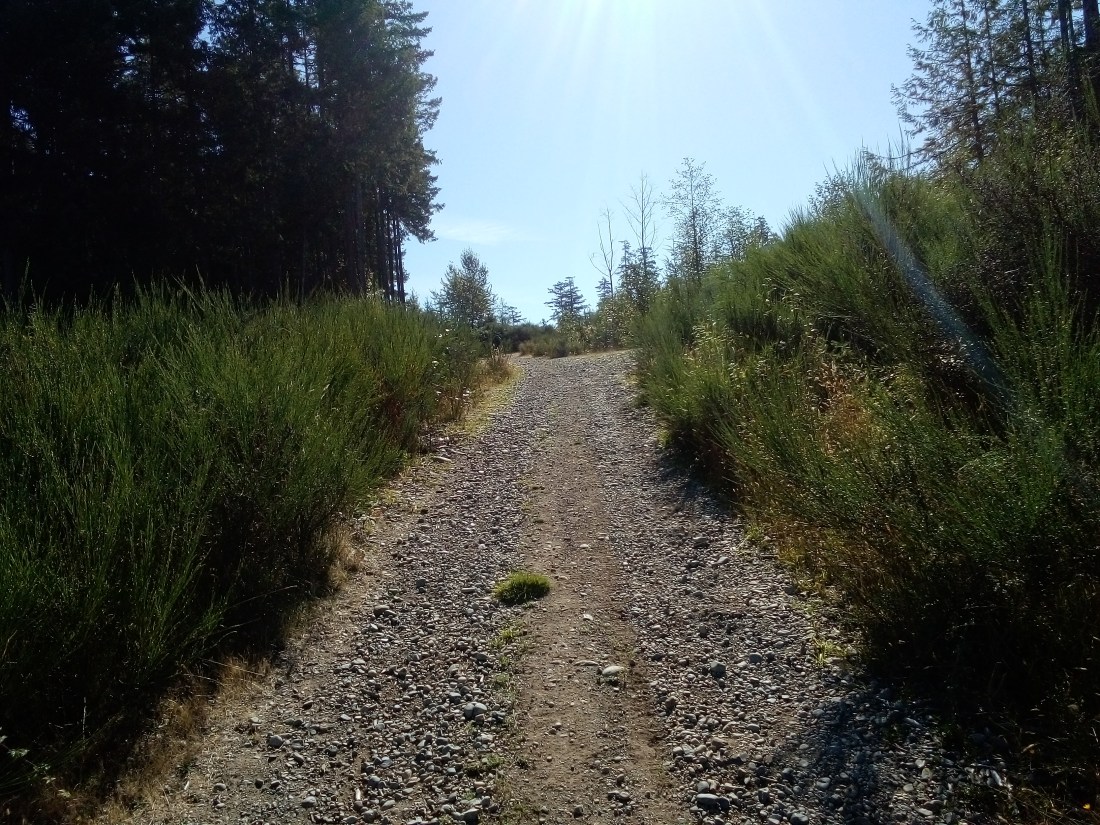
I love to run hills. There is nothing better for the legs and lungs. And I’m lucky. I can walk out the front door, and minutes later be doing a grueling uphill workout. Long and steep it holds the false promise of reaching a peak. But there’s no summit for a long time, just short breaks, and then more inclines – steep dirt tracks with scattered rocks and boulders. They’re ideal for trail running. And motorbikes. Sometimes I see the bikes themselves. Usually tire tracks are the only evidence of their presence. They are loud but my encounters with them while running are rare. And we can not hear them from our home. But others must, because this isn’t the backwoods yet. More like the shared backyard of a subdivision where hundreds of people live.
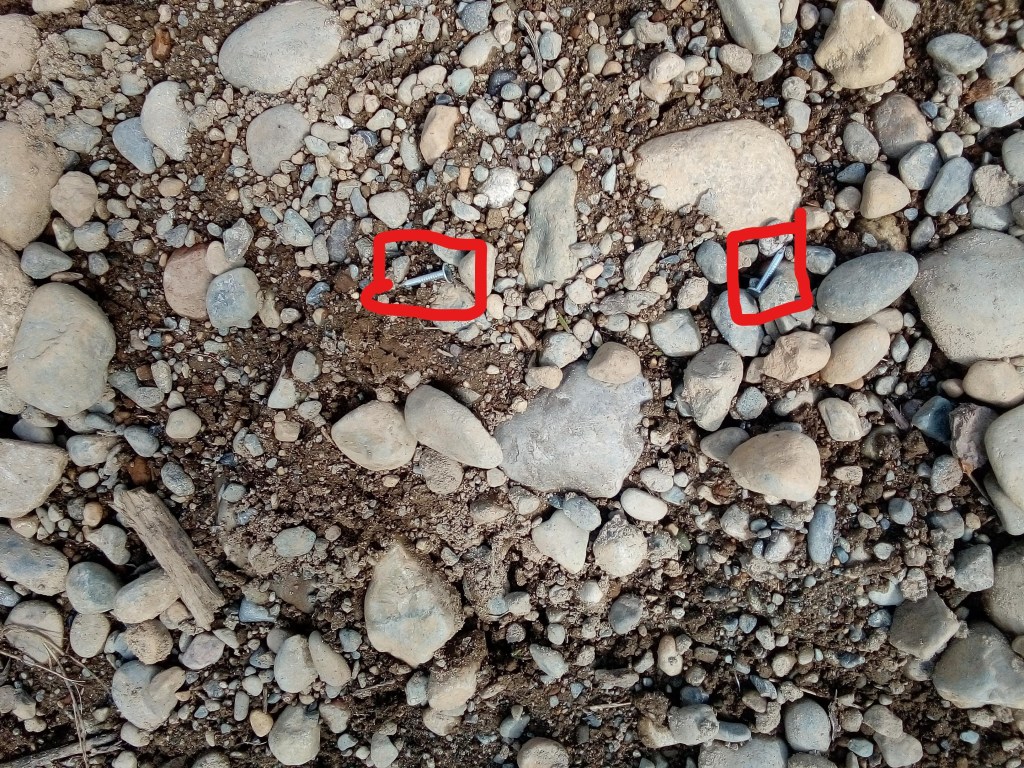
A few weeks back I was running up one of these short, steep trails when I saw a nail laying on the ground. And then two nails, and a third and a fourth, seemingly buried in the dirt intentionally, all over the trail. Each one placed carefully and with malice, guaranteed to puncture the tires of a dirt bike, or a quad. Equally guaranteed to pierce a dog’s paws or a child’s flesh.
I picked up eleven nails and filed a police report. I returned a few days later and found at least ten more. Maybe I’d missed them the first time, buried underneath the dirt and rocks. Maybe whoever put them there had returned.
It is in our nature as human beings to hurt one another. We hurt those we love. We hurt people we hate. We hurt people we don’t know. So, I was not surprised to find those nails on the trail. Not surprised. But saddened and angered. Thankfully, no one was hurt.
I still run that trail. I was there yesterday. I found six more nails. One was visible, churned up after I ascended, I spotted it on the descent. I excavated the area and found five more. I picked them up and added them to the now harmless pile of nails I’ve created inside a nearby concrete barrier. There are thirty nails in that pile now.
Thirty. Someone carried thirty nails to that trail, got down on their hands and knees, placed them individually along both sides of the trail and right down the middle, and then covered them with dirt and rocks. That’s cold. That’s premeditated. That’s malicious. That’s humanity.
The dark side of humanity.
We’ve had illness in our family recently. Metaphorically one of us stepped on a nail on the trail. That nail was Covid. It hit hard. Its effects are still being felt. Things are improving but not back to normal. In the toughest days we saw the best of humanity. A sibling and parents who dropped everything to care for the one they love. Friends and neighbours coming to the house and offering their medical expertise, bringing soup, dropping off cookies. Flowers and well wishes arrived from across the country. We saw the best side of humanity.
Yesterday I wanted to run for an hour. Not 59 minutes. The difference is psychological but real. There’s comfort and completeness in that extra minute.
Sixty minutes means thirty out and thirty back.
Our home is surrounded by forest and trails. I have many options, but one favourite – a short jog down the street and I disappear into the woods, unlikely to encounter anyone in a world of silence.
I climb, and descend, sometimes fast, sometimes slow, usually somewhere in between. Yesterday I checked my watch, once or twice, determined to turn around at the thirty-minute mark.
Twenty-four minutes into my run, on an isolated hilltop that overlooks our neighbourhood, I sensed where the run would end. I have been running long enough, decades now, to have a feel for pace and distance. It’s almost instinctual.
The tree. I would finish at the tree.
There are tens of thousands of trees within miles of our home.
There’s one that stands out.
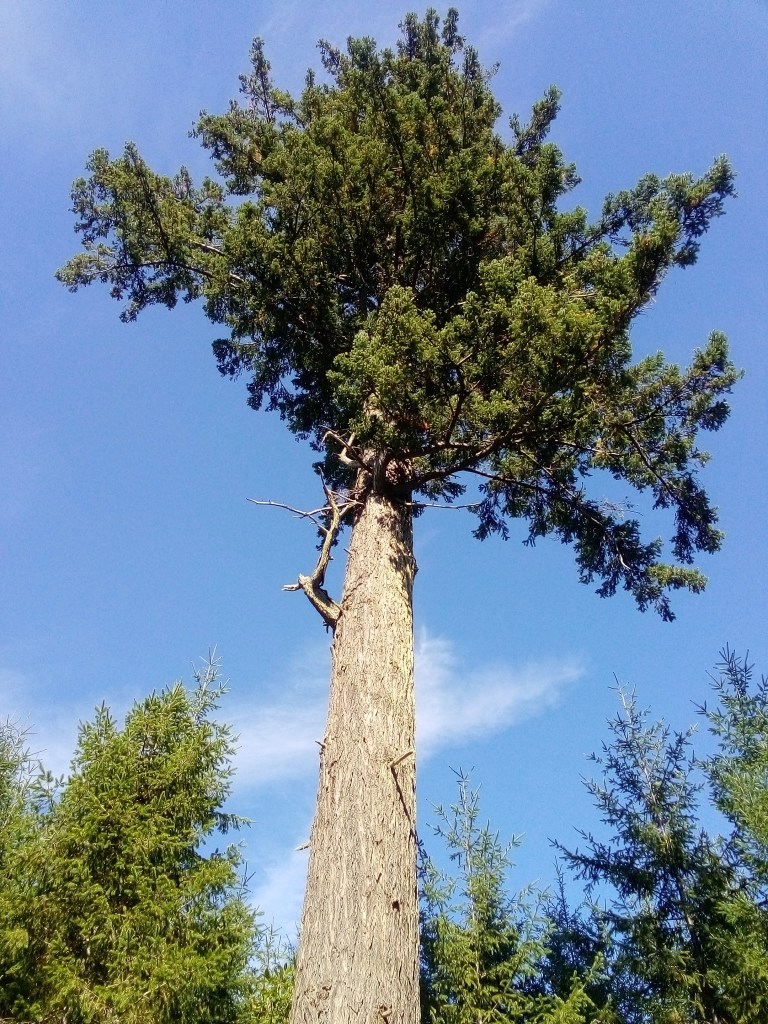
Pictures don’t do it justice. My pictures at least. But it is wide and thick and towers above everything around it. It’s a special tree. The kind of tree that protesters would chain themselves to, if a logging company ever threatened to cut it down.
What are the chances? What are the chances that tree, my favourite tree, would be exactly thirty minutes from my home, along my favourite route.
It got me thinking. About something that happened two weeks ago. I ran a trail race, with a friend. “Trail’ doesn’t do the event justice. Almost twenty miles long, with 4400 feet of elevation, it’s a never-ending series of ascents and descents. Nothing is flat. Nothing is easy. Everything burns.
About four hours in, my buddy was in pain – run stopping pain. He moved to the side of the trail and stopped moving. He’d been hurting for awhile but had never stopped. He’s not the kind of guy to stop. Ever. So, I knew he was in agony. And just then, at that very moment, another runner came by, her palm open, salt tablets in her hand. She offered him a handful. He swallowed them. And almost instantly his pain lightened. His legs loosened. He was moving again. What are the chances? We’d been on the course for hours. He’d been stopped for seconds. At that very moment, in his time of need, another runner, carrying exactly what he needed, came by.
He and I talked about that moment. We talked about God and chance, about life’s profound moments and what lay behind them.
I work in a unit that investigates homicides. Fortunately, on the island we live on, they are relatively rare. Relatively is a relative term. Because our plates are full. There is no shortage of work. Even though sometimes months pass between murders. Months.
Until a few weeks ago. When there were two murders within hours. Over a hundred miles separated them. Only minutes separated them. What are the chances?
I don’t know. Perhaps there are answers. Maybe none exist.
At the end of a side trail, not heavily used. I might have been the first person standing there in days, weeks – maybe even months or years.
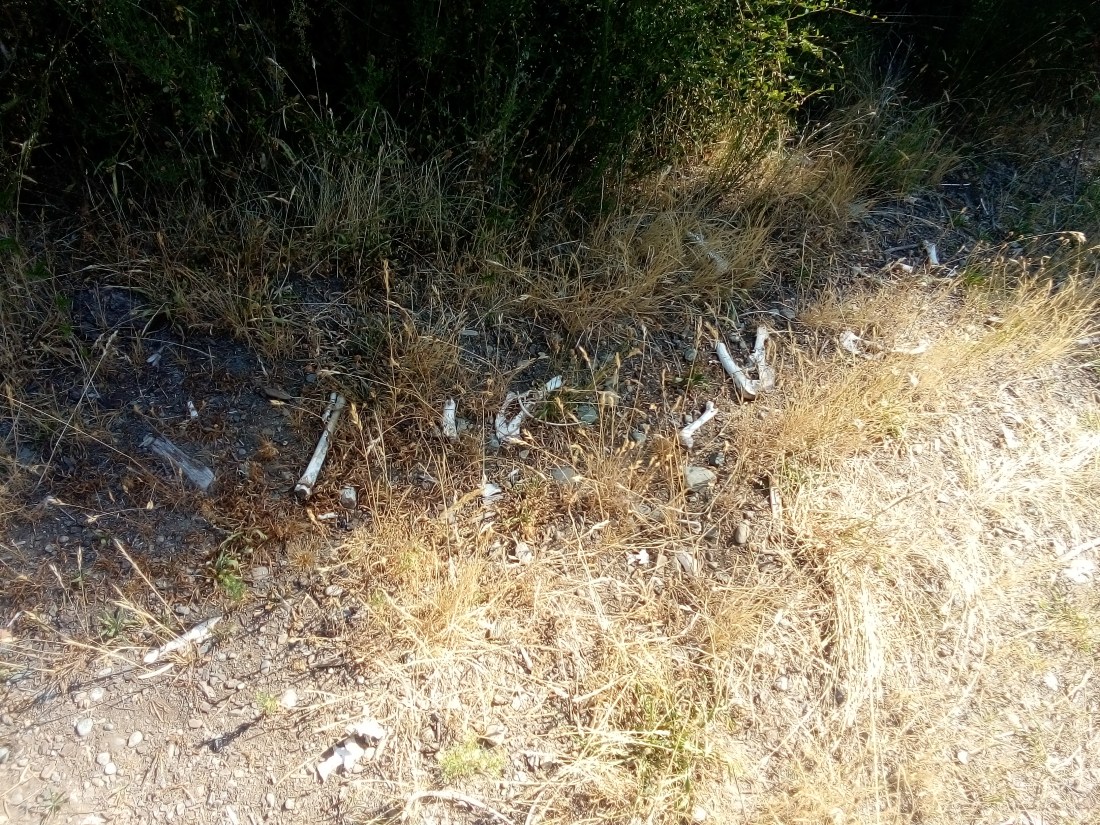
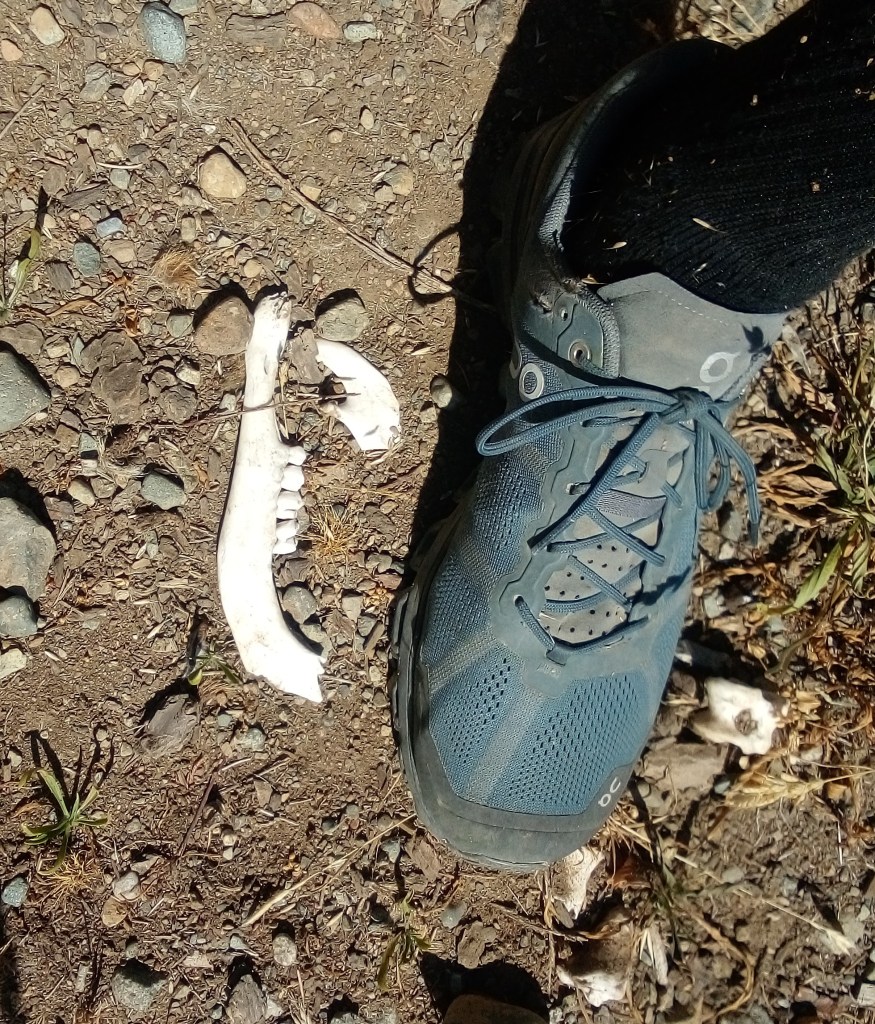
Scattered bones – bleached white. A deer ripped apart, the spinal cord severed, a piece of a jawbone, a smattering of teeth.
An awful death. Perhaps, mercifully, a quick one.
A vivid reminder that our forests and trails, so near to our homes, are a different world.
I’d hadn’t gone this deep into the woods for weeks. Since I’d seen a bear just minutes from our home. That was six weeks ago. On a well used trail at the junction of two paths. If I left my home right now, I could be there in five minutes. Or less. My bear encounter happened at midday. A warm day. The perfect day for a quick workout. Hill repeats. Up and down, up and down. Strengthen the legs, stress the lungs, tune out the world. Music blasting in my earbuds. I stopped tuning out when, on the last downhill, I glanced to my right and saw a black bear ambling up towards me. Maybe 30 or 40 feet away. A scenario I’d imagined a thousand times. I stopped running, pivoted, walked backwards down the hill. Slowly. Yanked out my bear spray. Pulled the cord on the noisemaker clipped to my chest. Knew in my head that black bears rarely attacked people. Feared in my gut that this one would. Kept retreating. Got to the bottom. Saw the bear at the top. It looked at me, curious and calm. And kept on going, towards the woods, away from me.
A few days later, I ran again on the same hill. Head on a swivel. No music in my ears. A little scared, but knowing the longer I waited to go back, the less likely I would be to do so. Still, that was close to home. Close meant comfort. At the junction where I’d seen the bear, I could see dozens of houses and cars passing below. It was practically my backyard.
The side trail with the dead deer was not my backyard. I’d planned this run for days, and then talked myself out of it the night before. Because I was scared. Scared to venture far from home. Far from houses and cars and a pretty subdivision. Into the land of cougars and bears. I talked myself into a safer run. Along well traveled roads, to a public park filled with hikers and mountain bikers.
Then I woke up. And talked myself out of the talking out.
Maybe it was because an article from a trail running magazine popped up on my Twitter feed with an article about the rarity of bear attacks and the effectiveness of bear spray.
Maybe because I thought of my daughter. The fears of a five-year old can be overwhelming – unfamiliar situations, unexpected change, a bug on our trampoline – overwhelming and every bit as real and powerful as the primal fears of an adult. When my daughter is scared, my wife and I encourage her to face those things that frighten her. To gain strength, incrementally, by winning small battles against little terrors.
Or maybe it was just because I love to run on hard packed dirt, baked dry by a month of heat, in the midst of towering, never-ending evergreens.
So, I went for that run. I added a knife to my arsenal. Razor sharp, encased in a multi-tool which I carried with me for the entire run. The multi-tool in one hand, a rock in the other. I banged them together frequently. “Make noise,” the experts say. Scare the bears off before they see you.
I made noise all right. No earbuds on this run. Blue Rodeo blaring from my cell phone. My rock smashing into my multi-tool whenever I approached a blind corner.
I made noise, and scared a lot of birds, who flew off as I approached.
I don’t know if I scared any bears, or cougars. I certainly didn’t see any.
But I smelled death. The unmistakeable odour of decomposing flesh hit me hard. Twice. The rotting carcasses must have been just meters off the main path that took me further and further out.
Further and further out to the side trail, which ended with scattered bones and an awful death.
An awful death and a necessary run.
A run that replaced fear with confidence.
A run that reminded me of why I was scared in the first place.
All synonymous with ‘the Malahat’ – both an 1100-foot mountain and a twisting highway on Vancouver Island.
When conditions aren’t ideal it’s awful to drive – no lights illuminate the road, few barriers separate speeding cars from massive trucks, and rain, fog, and snow slicken the pavement and obscure already obstructed views.
Oh, but the view from the summit is extraordinary.
Just hundreds of meters away from the congested highway is a mostly deserted trail. Last weekend I ran to the summit. In two-hours I saw two dirt-bikers and no one else. On an island of several hundred thousand people, I was alone.
The trail to the summit was mostly satisfying – hard-packed dirt and gradual elevation. Closer to the top, a rocky pathway replaced the earthen trail. Running slowed to a jog, every step a potential twisted ankle or inglorious fall.
Soon after, running ceased altogether when I chose the direct route to the top. Straight up a gully that must be a continual stream of water from November through spring. But last weekend, on a hot dry day with summer on the horizon it was dry and completely accessible. I grabbed a broken branch and used it as a walking stick to help as I scrambled my way up.
The scramble was worth it.
Oh, that view.
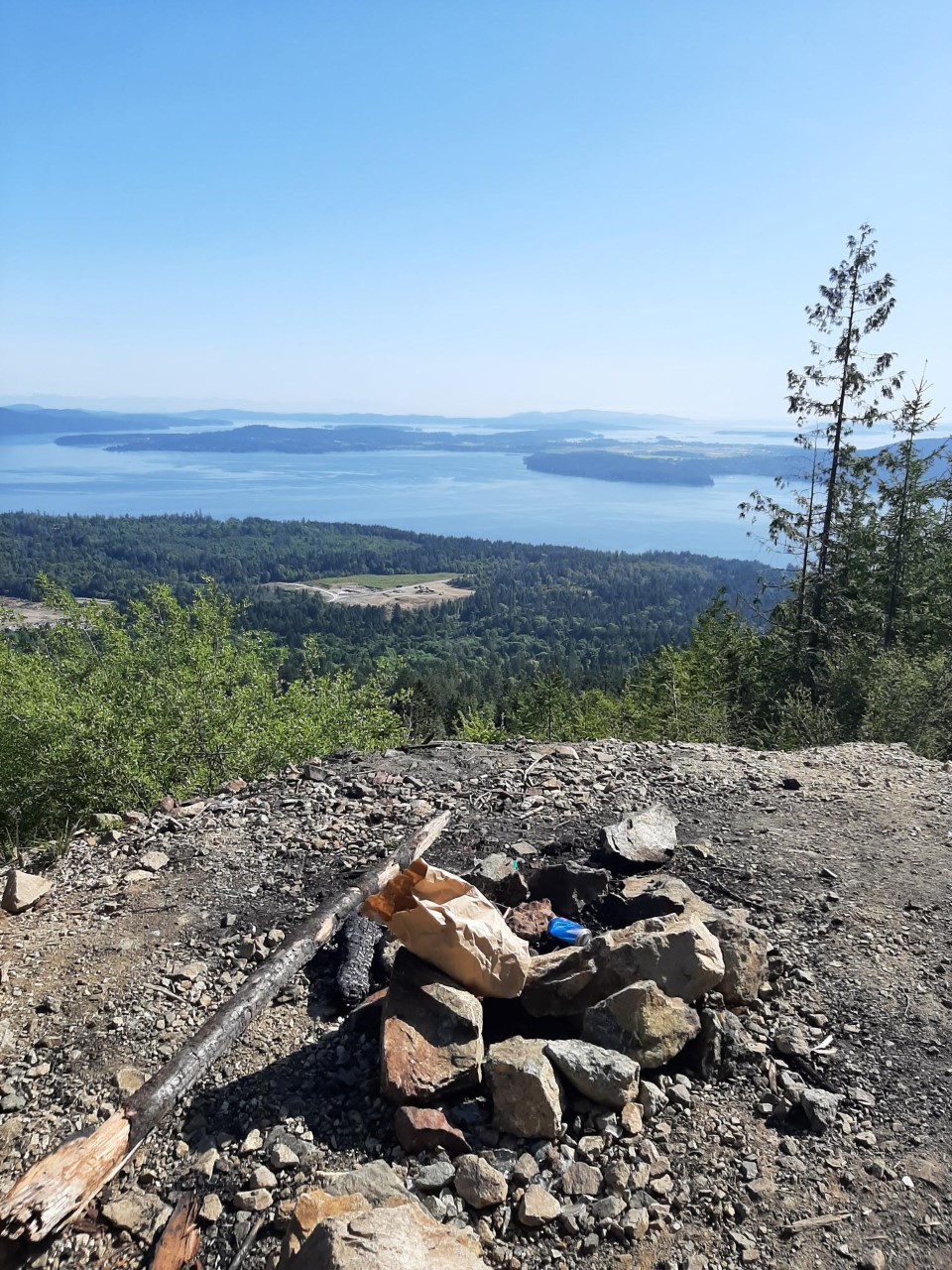
Blue sky, bluer ocean, distant mountains, a forest canopy, and an international airport as small as a postage stamp.
Travellers from across the country and around the world drive up the Malahat highway, exit at the scenic viewpoints, and revel at the glorious view. Thousands – tens of thousands – do it every year.
Far fewer take the trail to the top. Dozens. Hundreds. Runners like me. Hikers, mountain-bikers and quad-riders.
We are drawn by the same thing. Beauty. Magnificence. Nature’s wonders.
The attraction is so understandable. The destination is worth the journey.
Which makes the next part so hard for me to understand.
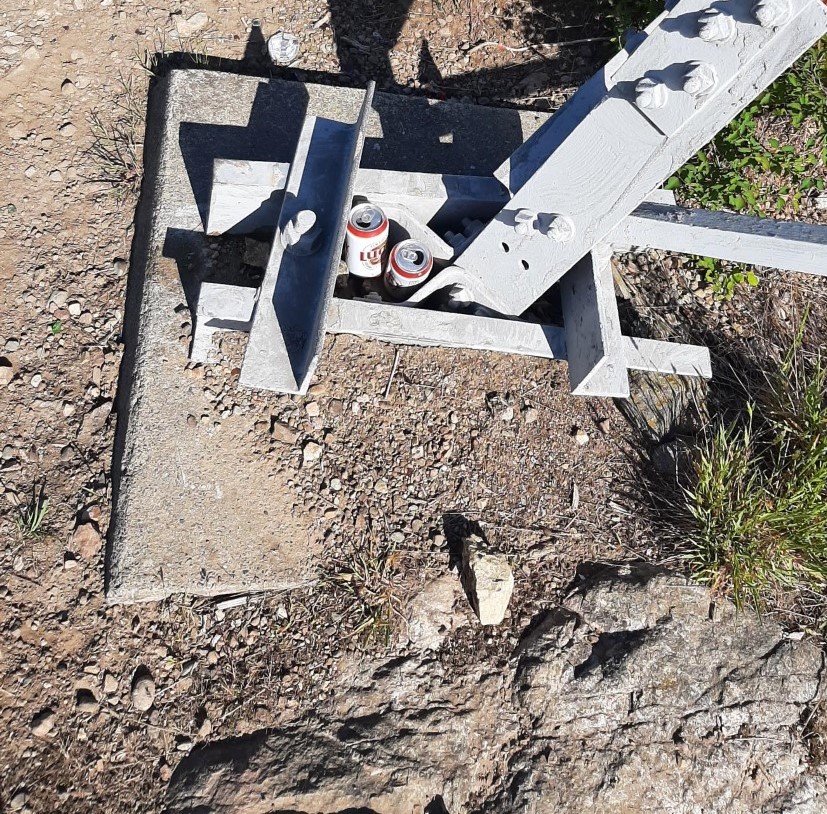
Garbage at the top. Beer cans. Plastic. Paper.
Lucky lager cans tucked into the base of a hydro tower. A fire pit filled with garbage.
Who does that? Who makes the effort to get to the top precisely because it is beautiful and then purposely despoils that beauty? The beer cans tucked into the hydro-tower. More cans, paper, and plastic left almost lovingly behind in the pit.
I don’t have the answer. My gut reaction is that anyone who does that is an asshole. I hate using that language in my writing, but it’s hard to feel otherwise.
But maybe that’s not fair. Maybe the person who makes the effort to get to the top and then discards their trash for others to clean is me on a bad day. Maybe it’s you. Those people are someone’s neighbours. They’re the people we see at the grocery store. People we hire, work with, or work for. Maybe our friends. Whoever they are, they walk among us.
I try and understand. Try to be sympathetic. Usually, my anger and disgust overpower empathy.
How are we supposed to understand people who clearly appreciate beauty, yet are so reckless in making the very place they worked so hard to arrive at, less beautiful?
There may be a million answers to that question. Philosophical, spiritual, practical. There may be no answers.
I’ve given up trying to understand. I find great wisdom in the words of Lee Child. Author of the massively best-selling Jack Reacher series, something he wrote several books back has stuck with me ever since – “People are complicated.”
I’m not sure truer words have ever been spoken, and I don’t think a philosopher, or a Nobel laureate could say it any better than that.
There’s a bear out there. Not far from my home. Somewhere. Drinking from the creek that cuts through our neighbourhood. Eating the berries along the trails that connect our community. Foraging through bins on garbage day.
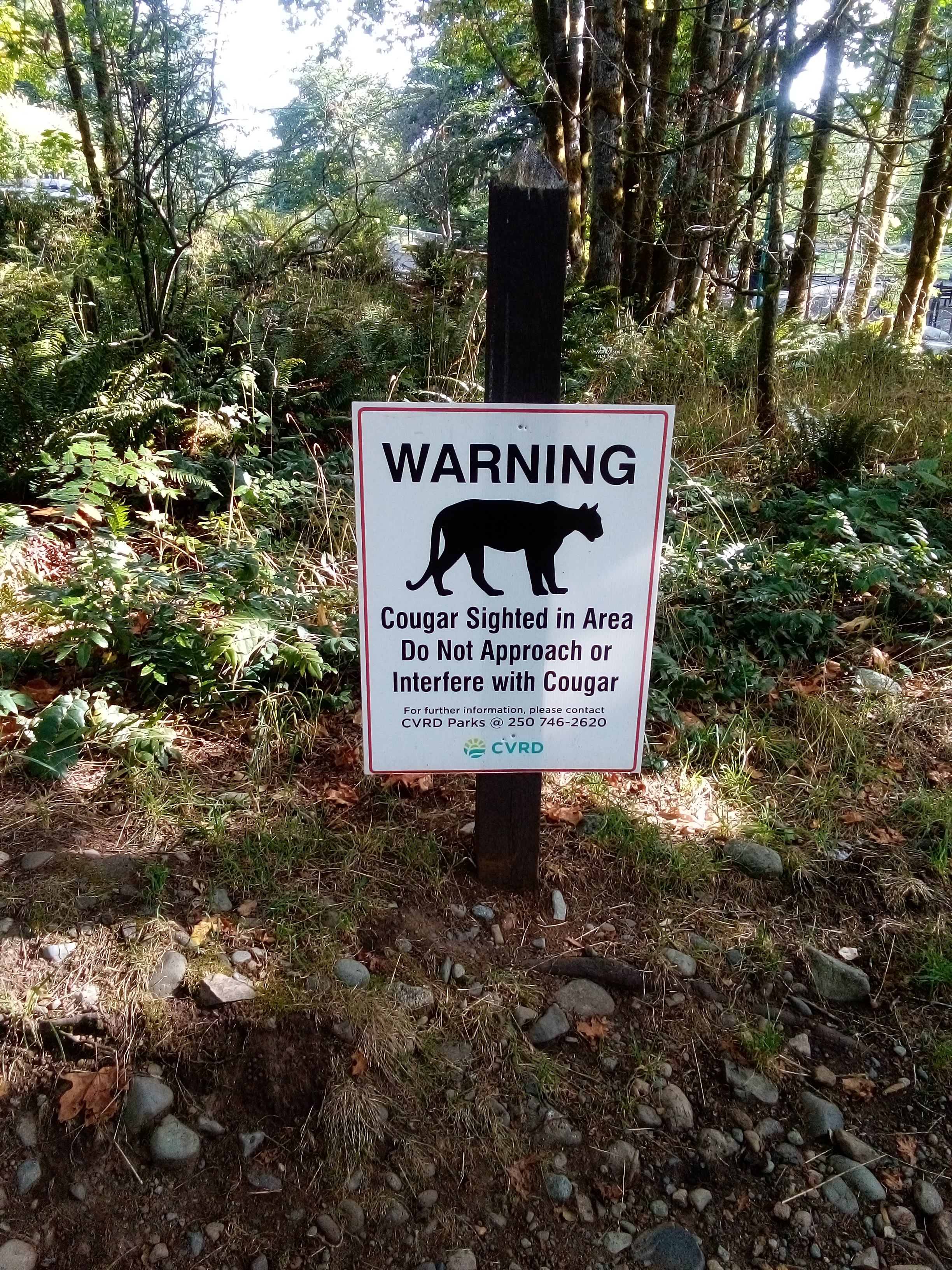
Signs at trailheads warn of recent sightings. It’s a black bear, not a grizzly. While black bears are unlikely to attack humans there are no guarantees. Google “Black Bear Attack – British Columbia” and you will get multiple hits – news stories that are weeks or months, but not years old.
It still feels very foreign to me, a relative newcomer to BC. I grew up in Southern Ontario and the closest I came to a bear was at the Toronto Zoo. A bear was as foreign and exotic as a hippo or elephant.
Not on Vancouver Island which has one of the densest populations of black bears in the world. I step outside the house, scan the forests that surround our small town, and know that there is likely not one bear out there, but dozens.
That knowledge affects every trail run. I do not obsess about it, but I am more than conscious that around every sharp corner, or in the deep brush beside me, a bear may lurk. That invisible bear may not be poised to attack and is likely more scared of me, than I am of it. However, more than once I have imagined rounding a bend and encountering a mother bear and her cubs. Whenever that scenario plays out in my mind, it does not end well for me.
I take some precautions. Or one precaution at least. Jammed into the front pocket of my running vest is a large can of bear spray. On most runs, I practice pulling it out so that doing so becomes as instinctive as a gunslinger sliding a pistol from his holster. I visualize an encounter I hope never happens. I startle a bear. We both freeze. I hold my ground hoping it will just amble away. It does not. I yell, hoping to frighten it off. I fight my body’s instinct to turn and run. I stare at the bear, continuing to yell. The bear spray is in my hand now. I back up slowly. The bear is still. Do I wait for it to pounce? Or do I attack first, shooting a stream of thousands of distilled hot peppers into the bear’s face? Causing it real agony to prevent my own potential agony? What if I unload the cannister of spray at the bear – and miss – creating a very angry bear, and a very unarmed me?
Questions which I hope are never answered. A scenario which I hope never plays out.
A chance I am willing to take every day I run in the woods. Because of the beauty that surrounds me everywhere. Mountains and forests. Grueling inclines and distant vistas. Silence and serenity.










 readerwriterrunner.com